
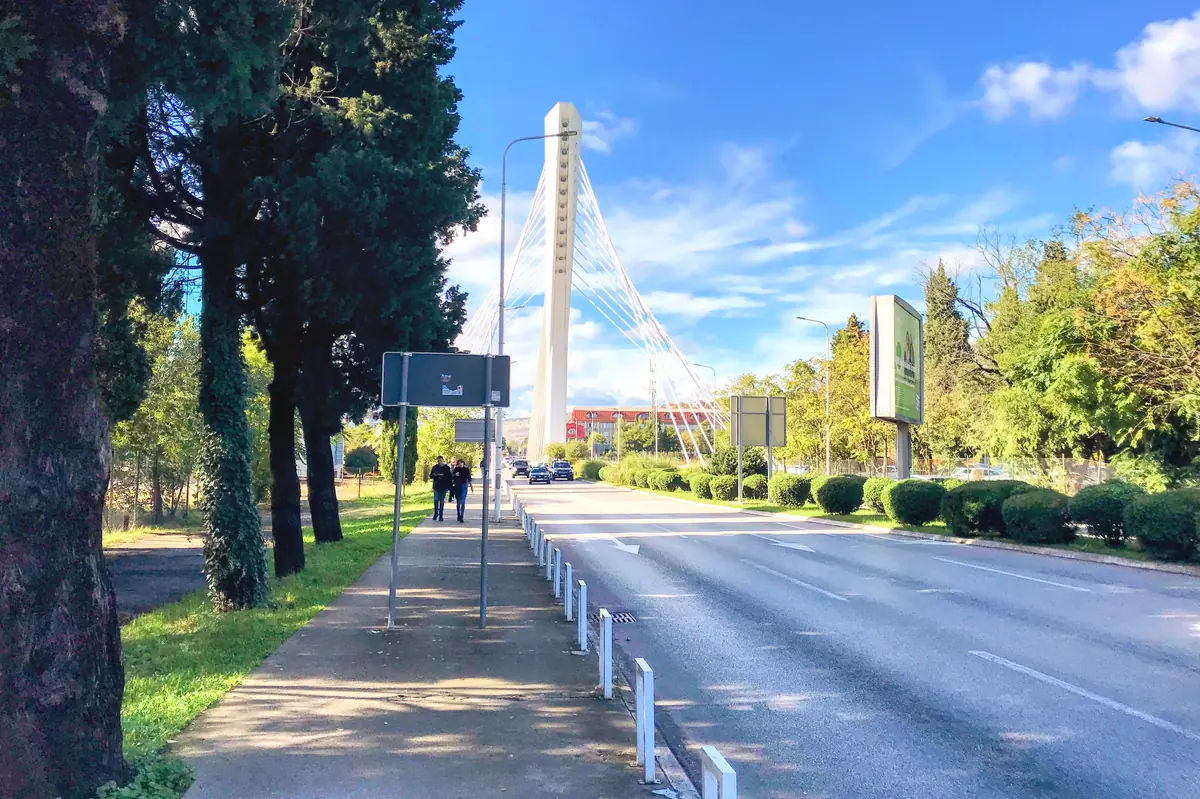
Often dismissed by those racing toward the Adriatic, Podgorica (pronunciation: pod·guh·reet·suh) is a city that reveals itself slowly through its rivers and its rituals. Rebuilt above the ruins of its Doclean and Ottoman ancestors, the former ‘Titograd’ is one of Europe’s youngest capitals, a place where Yugoslav brutalist architecture meets a surprisingly lush, Mediterranean soul.
To understand Podgorica is to understand its coffee culture; here, a simple espresso is the currency of daily life, business deals, and deep-seated memories. While it lacks the dense old-world charm of the coast, it offers a refreshing, tranquil pace, defined by the emerald currents of the Morača River and the iconic modernist silhouettes of Blok 5. This guide explores the capital’s unique contrasts, from the Ottoman alleys of Stara Varoš to the avant-garde spirit of its contemporary neighborhoods.
Best For
Coffee lovers, brutalist architecture enthusiasts, and travelers seeking high-value urban exploration away from coastal prices.
The Vibe
Laid-back and local; a Mediterranean “garden city” where life revolves around the rivers and long, unhurried café rituals.
Transport
The main hub for car rentals. Only 1 hour from the coast or 2 hours from the northern mountains via the new motorway.
Must-Try
Podgorički Popeci: Crispy, cheese-filled veal schnitzels that serve as the city’s ultimate comfort food.
Resident Tip: Avoid visiting in August if you are sensitive to heat. Podgorica is one of Europe’s hottest cities in peak summer, but May and September offer the perfect climate for river-side walking.
Quick Guide
Podgorica Planning Cheat Sheet
Where to Stay
Hotel Ziya (Quiet elegance and wellness near Gorica park) or Hilton Podgorica (Classic luxury with the city’s best rooftop bar).
View Best Rates →Arrival & Transport
Podgorica Airport is 15 minutes away. Taxis are very affordable, but a rental car is vital for day trips to Ostrog or Niagara Falls.
Search Car Rentals →Must-See Icon
Cathedral of the Resurrection: Step inside to see the massive gold frescoes and intricate stone carvings of Montenegro’s most grand modern landmark.
Temple Information →The View
Walk up Gorica Hill (the city’s namesake) to the Partisan Memorial for a panoramic view of the skyline and the Millennium Bridge.
If you visit in late spring, head to the Cijevna River. The local “Niagara Falls” roar with snowmelt, and the nearby beach bars offer a perfect, cool escape from the rising city heat.
— Resident Insider Tip
Echoes of Empire, Shadows of Socialism
Established in Stone,
Established in Stone,
Forged in Concrete.
Established as Ribnica in the 11th century over Roman foundations, the city has been a crossroads for the Nemanjić dynasty, the Byzantine Empire, and 400 years of Ottoman rule.
“The devastation of WWII leveled the playing field, providing a once-in-a-lifetime opportunity to build a socialist utopia from the ground up.”
In 1946, the city shed its skin to become Titograd, a canvas for socialist forward-thinking. Today, Podgorica has preserved its laid-back nature despite its booming international status. Only 2.4% of travelers make the detour from the coast, leaving the “genuine” Montenegro to those who know where to look.
Architectural Pilgrimage
The Brutalist Trail
Podgorica is a primary destination for fans of Social Modernism. Following the devastation of WWII, creative planners used the city as a canvas for monolithic, earthquake-resistant concrete structures.
1. Blok 5
A massive residential project consisting of thirteen modular towers designed by Mileta Bojović. With its rugged concrete balconies and “fortress” aesthetic, it remains the most emblematic neighborhood of the Yugoslav era.
Architectural Movement: Structuralism2. The “Old Government” Building
Completed in 1979 by architect Radosav Zeković, this was formerly the Central Committee of the League of Communists of Montenegro. Its heavy, rhythmic facade is a masterclass in the institutional brutalism of the late Titograd period.
Architectural Movement: Late-Modernist Brutalism3. Hotel Podgorica
The masterpiece of Svetlana Kana Radević, Montenegro’s first female architect. The building famously integrates smooth river stones into its concrete facade to mirror the Morača riverbank it overlooks.
Architectural Movement: Critical Regionalism Book Stay at Hotel Podgorica →4. Barutana (Spomenik)
Located just outside the city, this “Spomenik” is another Radević triumph. A series of abstract concrete pipes rising from the earth, it commemorates the fallen soldiers of the Lješanska Nahija region with a striking, otherworldly presence.
Architectural Movement: Abstract Expressionism5. The Main Bus Station
Designed with sharp, dramatic angles influenced by Le Corbusier. It serves as a striking welcome to the city, featuring deep shadows and raw geometric forms that are a favorite for architectural photographers.
Architectural Movement: ModernismResident Tip: Most of these landmarks are within a 20-minute walk of each other, though you will need a taxi for Barutana. For the best interior experience, visit the Hotel Podgorica terrace for a view of the river through its stone arches.
Legacy & Spirit
Stara Varoš & Sacred Sites
Podgorica has been through enough wars and reconstructions to lose its identity ten times over, but in the quiet, narrow lanes of Stara Varoš, the city’s Ottoman roots are still very much alive. It is a world away from the concrete blocks of the modern center, a place where a few surviving stone landmarks tell the story of the city long before it was Titograd.
A Note on Exploring Stara Varoš
While the history is significant, walking through Stara Varoš for the architecture alone can be underwhelming, as much of the original character has been lost to modern residential builds. Today, it is best experienced as a gastronomic destination. It is home to some of the city’s most authentic restaurants, like the famous Lanterna, where you can sample traditional Montenegrin flavors in a rustic stone setting.
Recommended Local Tour
All the Secrets of Podgorica Walking Tour
Don’t wander aimlessly; uncover the hidden Ottoman ruins and Ribnica’s Roman history with a professional guide who can bridge the gap between ancient stone and modern concrete.
Environmental Reality Check
While the Ribnica and Morača rivers are geographically stunning, Podgorica continues to struggle with waste management. Be prepared to see plastic debris and litter caught in the trees and along the riverbanks, especially after heavy rains. Despite this, the natural “emerald” color of the water remains a beautiful sight from the bridges.
The Orthodox Temple of Christ’s Resurrection
The monumental exterior featuring rough-cut white stone blocks.
The exquisite golden frescoes and intricate interior craftsmanship.
Admission to the cathedral is free, allowing visitors to marvel at the massive chandeliers and detailed stone carvings. Podgorica is famous for murals that occasionally depict historical figures (like Marx or Tito) in surprising religious contexts. After your tour, the adjacent church café (АPXONTAPIKI) offers a quiet sanctuary for a traditional coffee.
The Garden City
Rivers & Pine Ridges
Podgorica is defined by its five rivers and its “lungs”: the Mediterranean pine forests that wrap around the city center. It is a capital designed for walking, where the scent of wild sage from the hills often drifts down into the urban blocks.
Gorica Adventure Park: Shaded trails and a forest cafe just minutes from the city center.
St. George Church: The oldest structure in Podgorica.
Gorica Hill: The Heart of the City
The city takes its name from this very hill, as “Podgorica” literally translates to “under the little hill.” Beyond the labyrinth of shaded jogging trails, Gorica is deeply family-friendly. The Adventure Park offers ropes courses for all ages, while the car-free paths make it a safe haven for parents with strollers. At the summit’s edge lies the 10th-century Church of St. George, the oldest structure in the city. Whether you are there for a morning run, a family weekend, or a quiet sunset walk, Gorica is where the city’s pulse slows down.
The Summer “Beach” Life
When the temperatures climb, Podgorica locals head to the water. Both the Morača and the Cijevna rivers become vibrant swimming spots. Pop-up beach bars appear on the pebble shores, offering a unique “urban canyon” vibe where you can grab a cold drink and dive into the emerald current.
The turquoise waters of the Cijevna River, a perfect local escape for summer swimming.
The unique riverside setting with the former Ottoman mosque below the Ribnica Bridge.
Local Secret
Itaka Library Bar
Tucked directly beneath a massive concrete bridge over the Ribnica River, this bar is housed in a former Ottoman-era Turkish bathhouse and is one of my favorite spots for a “cultural pause” and a local craft beer.
Petrović Park (Kruševac)
Surrounding the former winter palace of King Nikola I Petrović, this park is a masterclass in 19th-century landscaping. It houses the Center of Contemporary Art and provides a sophisticated, quiet atmosphere filled with exotic trees and art installations.
The Cijevna Canyon
Canyons & Cascades
Within a 15-minute drive, Podgorica’s concrete exterior gives way to a rugged limestone landscape. The Cijevna River, carving its way from the Albanian border, has created a narrow, dramatic canyon characterized by turquoise waters, sun-bleached rocks, and hidden swimming holes.
The “Niagara” of Montenegro
Just outside the city limits lies a breathtaking spectacle where the Cijevna River plunges over a wide limestone shelf. Known locally as Niagara, this series of waterfalls and natural stone pools is a favorite escape for a riverside lunch or a spring swim.
A Note on Seasonality
While visually striking, the falls frequently dry up completely by August due to the intense summer heat and local irrigation needs. To witness the full force of the river, the ideal window is March through June.
The Riverside Ritual
Adjacent to the falls is the Restoran Niagara, built right into the river rocks. It’s the perfect spot to sample local river trout, smoky ćevapi, or the indulgent Tri leće (three-milk cake) while listening to the roar of the water.
Local Tip: This region is also famous for Burek and Flija – a traditional Albanian dish of laboriously layered, slow-baked crêpes that is a true staple of the Cijevna riverlands.
Exploring the Upper Canyon
If you have a car, drive further upstream into the canyon. The road narrows and the cliffs rise, revealing secluded limestone “beaches” where the water is a vivid, icy turquoise, perfect for those seeking a more solitary experience away from the restaurant crowds.
Podgorica Transportation
Need Wheels to Explore the Canyons?
Public transport won’t take you into the upper reaches of the Cijevna Canyon. Renting a car gives you the freedom to escape the city center and discover Montenegro’s hidden river beaches at your own pace.
Archaeology & Art
Foundations of the Capital
Duklja: The Roman Roots
Located just 3km north of the center, Duklja (Doclea) is the most significant archaeological site in the region. Originally the stronghold of the Illyrian Docleats, it rose to prominence under Roman Emperor Claudius (41–54 AD), eventually becoming a thriving city of 10,000 residents.
Today, fragments of the city walls, temples dedicated to Diana and Roma, town spas, and the foundations of a Roman forum with an early Christian basilica remain visible at the confluence of the Zeta and Morača rivers. Admission is free, and the site is best viewed just before sunset when the light hits the ancient columns.
Medun: Illyrian Heights
Known in antiquity as Meteon, this fortress city was the last stronghold of the Illyrian King Gentius. It sits roughly 13km from the capital and houses the museum of Marko Miljanov, one of Montenegro’s most revered heroes.The climb to the top isn’t very steep, making it an accessible trek for a massive reward. It is an exceptional spot for sunset, offering panoramic 360-degree views that stretch across the rugged Kuči Mountains and the vast Podgorica plain.
Essential Stop
City Museum of Podgorica
Located in the city center with free admission, this is the essential first stop for context. Beyond archaeological finds, it houses works by legendary Montenegrin painters like Petar Lubarda and Dado Đurić. Their raw, expressive styles provide the perfect artistic lens to understand the country’s turbulent and resilient past.
Seasonal Soul
The Cultural Calendar
12
December: Holiday Spirit
Independence Square transforms into a winter village of wooden stalls and mulled wine. It’s the city’s communal living room, culminating in legendary open-air concerts for New Year’s Eve.
The Nectar of the Karst
Viticulture: The Valley of Vranac
Podgorica sits in a sun-drenched basin that has been perfect for wine-growing for millennia. With more than 30 wineries (vinarija) within a 15-minute drive, the capital is the gateway to Montenegro’s red wine heartland, home to the endemic Vranac and Kratošija grapes.
The Giant
Plantaže: The Vineyard Horizon
Part of the state-owned Plantaže estate, the Šipčanik wine cellar is housed in a former Yugoslav military aircraft hangar. It is a subterranean tunnel 356 meters long, holding millions of liters of aging wine.
Plantaže Private TourThe Boutique Scene
For a more intimate experience, head to the hamlet of Beri. Here, the landscape shifts into rolling vineyards and small family estates. Wineries like Zenta Vinarija Vučinić or Vinarija Ćetković offer a stark contrast to the industrial scale of Šipčanik.
These family-run estates provide private degustations where high-end reds are paired with local cheeses, olives, and prosciutto (pršut). It is a slow, sensory immersion into the Podgorica way of life, where the winemaker often pours the glass themselves.
Book Boutique Winery TourWine Lover’s Note
- Vranac: A bold, dark red with notes of sour cherry and blackberry.
- Kratošija: Genetically identical to Zinfandel/Primitivo, offering a spicy complexity.
- Pro-Tip: Always book boutique tastings at least 24 hours in advance, as these are small operations.
A Taste of Titograd
The Ritual: Coffee & Gastronomy
The “Dojč” Philosophy
In Podgorica, coffee isn’t a caffeine fix – it’s a social contract. You’ll hear locals ordering a “Dojč” (pronounced doy-ch), a local term for a long espresso with plenty of milk. It is a relic of the days when the price of the drink was exactly one German (Deutsch/Dojč) Mark.
To experience the true urban pulse, head to Bokeška or Njegoševa streets. These pedestrianized strips are lined with shaded terraces where the city’s youth and business elite alike spend hours in unhurried conversation. It is here that the “laid-back” nature of the capital is most visible.
The Signature Dish
Podgorički Popeci
If you try only one local specialty, let it be the Popeci. This isn’t a dish for the faint of heart: it consists of veal schnitzels rolled with Kajmak (clotted cream) and local prosciutto, breaded, and fried until crispy. The result is a molten, savory center that serves as the city’s ultimate comfort food.
Best At:
Restoran Pod Volat or Lanterna
Pair With:
A glass of Vranac Pro Corde
Curated Dining Selection
Porto Restaurant
Traditional Adriatic cuisine in a tranquil courtyard. Renowned for fresh fish and highly revered octopus dishes near the Millennium Bridge.
Steak House
Sourcing meat from their own hinterland farms, this venue is the gold standard for dry-aged Ribeye, T-bone, and Tomahawk steaks.
Spago
An elegant favorite in City Quart, offering wood-fired Neapolitan pizzas and a rich selection of domestic and international wines.
The Podgorica Edit
Where to Stay
Contemporary Luxe
Reserve Your Room
Boutique Hotel Boscovich
Housed in a magnificent Parisian-style edifice in Nova Varoš, this 30-room stay offers fresh, contemporary interiors and a central location.
Design & Dining
Book This Design Icon
Hemera Boutique Hotel
An affectionately restored townhouse with an industrial-chic aesthetic. Famous for its ground-floor restaurant and intimate wellness center.
The Landmark
Book Your Stay
Hotel Hilton
The city’s business anchor. Its rooftop bar is the premier spot for watching the sunset over the Podgorica rooftops with a cocktail in hand.
Lifestyle & Relocation
Living in Podgorica
The Strategic Capital
Podgorica offers a rare quality of life defined by its 15-minute rule: the international airport, the city center, and numerous green spaces are all within a short drive. Positioned exactly halfway between the Kolašin ski resorts and the Adriatic beaches, the capital remains vibrant year-round, even when the coastal towns quiet down in the off-season.
From the bustling City Quart – the hub for modern condos and trendy boutiques – to the quiet charm of parkside townhouses in Gorica C and the private, hillside sanctuary of Verde Village, the city offers a diverse real estate landscape for international newcomers.
International Education
For families, the city provides high-quality British, American, and French curricula. These institutions nurture both academic and social development in a globalized environment:
- QSI International School
- United Kids International (UKIM)
- Adriatic International
- French European School (EFEP)
“Podgorica may be the capital under the hill, but for those who look beneath the surface, it is a city very much on the rise.”
Logistics & Planning
The Practical Gateway
When to Visit
Avoid August unless you enjoy extreme heat. While June was historically mild, recent years have seen it become increasingly punishing. The “Sweet Spots” are April, May, September, and October. These months are perfect for the vibrant café culture and lush river life.
The Strategic Hub
Podgorica is the best base for car rentals, offering better variety than the coast. Via the Princess Xenia Motorway, the northern peaks are under 2 hours away.
For a coastal escape, the scenic train line offers an affordable commute to Virpazar and Bar.
Getting Around
Taxis are cheap and reliable. Download the Tesla Taxi app for a premium, electric ride, or use Viber or WhatsApp to call/text major associations like 19700.
Full Taxi Guide
Airport Connection
Podgorica Airport (TGD) is 12km from the center. While an hourly bus service (L-20) exists, it is often more convenient to take a taxi (€15-€25) or pre-book a private transfer for a seamless arrival.
Book Private Transfer