
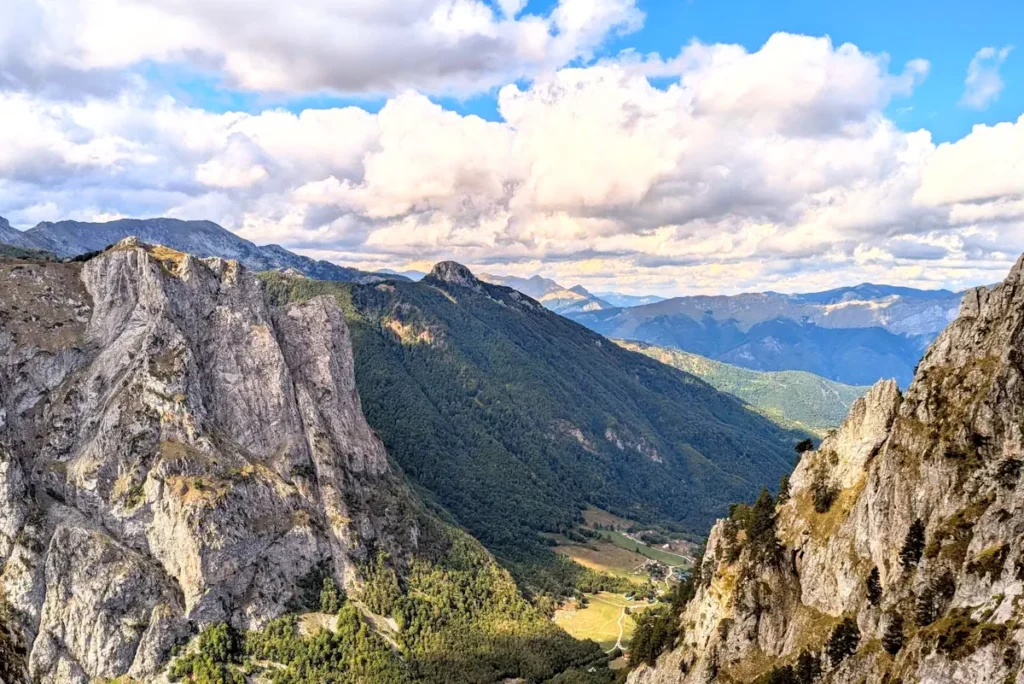
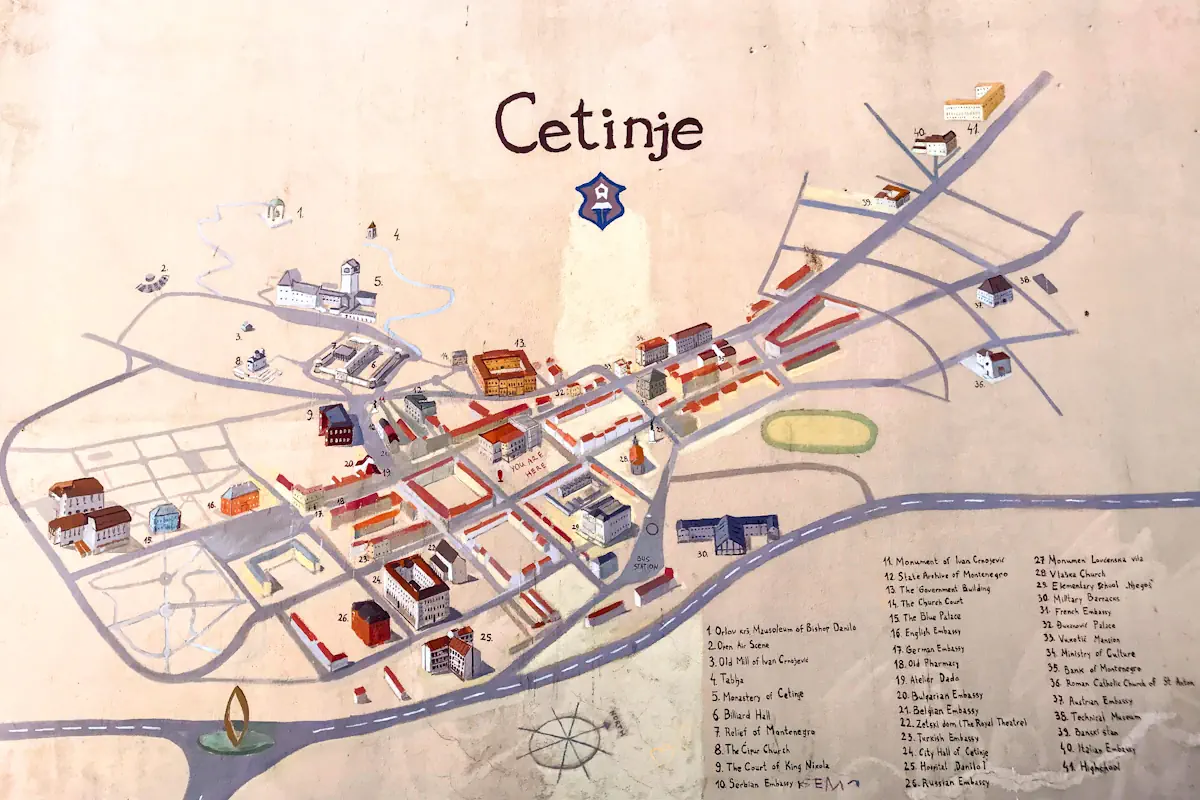
Visiting Cetinje, Montenegro’s Old Royal Capital, is often overlooked by travelers rushing toward the coast, but it remains the country’s undisputed cultural heartbeat. Resting at an altitude of 650 meters, this high-plateau town served as the bedrock of Montenegrin civilization, famously remaining a defiant stronghold that neither the Ottomans nor the Venetians could ever fully conquer.
As the nation’s capital from 1878 to 1914, Cetinje evolved into a sophisticated European hub, home to the region’s first printing house (est. 1493) and the elegant Blue Palace – the former royal residence that still serves as the official seat of the President. Today, the town of 15,000 offers a raw, authentic character found nowhere else; a place where historical sovereignty meets a refined mountain pace. This guide navigates the essential landmarks, from the legacy of the Petrović-Njegoš dynasty to the boutique culture of the modern highland center.
Best For
History buffs, cultural explorers, and those looking to escape the coastal heat for Montenegro’s heartland.
The Vibe
Regal yet understated; a “Museum City” where 19th-century European diplomacy meets a slow-paced mountain lifestyle.
Transport
A 45-min drive from Budva or Podgorica, or take the Kotor-Lovćen Cable Car and a short shuttle into town.
Must-Try
Sampling the legendary Njeguši Prosciutto and Lamb in Milk in a local stone tavern, paired with mountain honey and cheese.
Resident Tip: Cetinje is notoriously rainy in the shoulder seasons. If the coast is sunny, still pack an umbrella – the town is the “wettest” in Europe, adding to its misty, poetic charm.
Quick Guide
Cetinje Planning Cheat Sheet
Where to Stay
Hotel Gradska (Boutique luxury on the square) or Guest House TILIA (Authentic local charm in a garden setting).
View Best Rates →Arrival & Transport
Buses run hourly (€5), but a rental car is best to visit nearby Lipa Cave and Lovćen.
Search Car Rentals →Must-See Icon
The Lady of Philermos – Visit the Blue Chapel in the Art Gallery to see one of Christianity’s most legendary and well-traveled icons.
Cetinje Museum Pass Info →The View
Hike to the Mausoleum of Bishop Danilo on Eagle Hill for the best panorama of the town’s red roofs and limestone peaks.
If you visit in winter, don’t miss ‘Novogodišnje priče’ (New Year’s Stories). The town square transforms into a festive fairytale with wooden cottages, mulled wine, and open-air concerts, proving the Old Capital’s heart beats warmest in the snow.
— Resident Insider Tip
The Sovereign Seat
Royal Legacies: The Petrović-Njegoš Palaces
Cetinje is not defined by defensive stone walls, but by European elegance and the defiance of the Petrović-Njegoš dynasty. Walking these streets feels like traversing an open-air archive of Montenegrin statehood.
The Blue Palace
Built in 1895 for Crown Prince Danilo, this late-Empire residence is the official seat of the President. Its vibrant cerulean hue and ceremonial guards offer a living connection to Montenegro’s modern sovereignty.
Truth-Teller Tip: You cannot enter the interior, but the gardens are open for photography. Visit at the top of the hour to see the changing of the guard.
King Nikola’s Museum
The deep-red Royal Palace is the town’s centerpiece. It houses the State Museum, featuring original royal furniture, tattered battle flags, and the private library of the Petrović-Njegoš family.
ENTRY: 8€ | INCLUDED IN THE 20€ MUSEUM PASS
Don’t Miss
“Look for the 11th-century Byzantine ‘Lady of Philermos’ – one of the world’s oldest and most sacred icons. Its journey from the Knights of Malta to the Russian Tsars before finding refuge in Cetinje is a story as epic as Montenegro itself.”
The National Museum (Vladin Dom)
Located in the former Government House, this yellow neo-Renaissance giant is the heavy-hitter of Cetinje culture. It is split between the History Museum – an epic journey of Montenegrin resistance – and the Art Gallery, featuring over 3,000 works of Yugoslav masters.
The Neo-Renaissance facade of the former Government House
Ethnographic Museum
A stunning display of highland folklore. Explore intricate costumes, silver-filigree weaponry, and traditional musical instruments.
Museum of Money
Located on the main promenade, it features a working 19th-century printing press and a sobering history of the 1990s hyperinflation.
The Collector’s Choice
Experience the Full History
If you find the town’s dense history overwhelming, the Great Montenegro Tour is the most efficient way to see these landmarks. It includes a dedicated guide for the capital’s highlights and transport between the city, the cave, and the mountain summit.
Sacred Heritage
The Spiritual Soul: Cetinje Monastery
Founded in the 15th century by Ivan Crnojević, this complex is the unbreakable fortress of Montenegrin identity. While the original was destroyed, the current 18th-century structure was inspired by the grand Italian Basilicas of Ancona, blending coastal elegance with mountain resilience.
The monastery gates sit directly across from the historic Biljarda walls.
Relics of the Old World
The monastery today is administered by the Serbian Orthodox Church and is globally acclaimed for housing some of Christianity’s most sacred artifacts: the Right Hand of St. John the Baptist and a particle of the True Cross. Within its quiet interior, you can also pay respects at the relics of Saint Peter of Cetinje, all housed behind an altar adorned with vivid frescoes and golden icons.
Vibe Check
“The golden interior is breathtaking, but respect the rules – photography is strictly forbidden. It is located just steps from the National Museum, making it an easy addition to your walking route.”
Castle Church (Cipur)
Built by King Nikola I in 1886 on the remains of the original monastery, this church holds the remains of the King himself and Queen Milena. The surrounding ancient columns and foundational walls give the site a haunting, ruin-like atmosphere that is a favorite for photographers.
Eagle Hill Viewpoint
A 15-minute hike from the monastery leads to the Mausoleum of Bishop Danilo. The stone arches over the tomb are iconic, but the real prize is the panorama of the Cetinje valley.
Hidden Gem:
On your way back down, look for the old Summer Theatre – a stone amphitheater at the foot of the hill.
Chronicles of the Old Capital
A Legacy of Defiance: The Cetinje Timeline
From a secluded mountain refuge to a regal diplomatic hub, Cetinje’s evolution is the story of Montenegro itself.
15th Century
The Birth of a Refuge
Ivan Crnojević retreats from Skadar Lake to the karst highlands, establishing a mountain sanctuary far from the Ottoman advance.
Late 17th Century
The Petrović Dynasty
The rise of the Prince-Bishops transforms a village into an urban center of power and religious authority.
1918 – 1945
The Yugoslav Era
Montenegro joins the Kingdom of Yugoslavia. Cetinje remains the administrative soul of the region.
From Royal Seat to Cultural Bastion
The turning point came in 1945. As the Socialist Republic of Montenegro took shape under Tito, the capital was moved to Podgorica (then Titograd). While Cetinje lost its administrative weight, it never lost its prestige.
Today, the city serves as a living museum. It is the home of the Faculty of Fine Arts and a magnet for artists who draw inspiration from the red-roofed architecture and the surrounding limestone peaks.
The History-Seeker’s Tip: “Catch the historical center right at ‘golden hour.’ Seeing the fading light hit the crumbling facades of the old embassies makes it easy to imagine the days when this tiny mountain town was a high-stakes diplomatic hub. It feels less like a museum and more like a film set.”
Poetry and Power
The Biljarda: A High-Stakes Heritage
Built in 1838 as the residence of Montenegro’s most famous ruler, poet, and philosopher – Petar II Petrović-Njegoš – the Biljarda feels more like a fortified villa than a palace. It gets its name from the first billiard table in the country, which Njegoš had famously carried up the mountains from the coast by hand via the Ladder of Kotor (hiking) trail.
Inside the Walls: The museum houses Njegoš’s personal effects, original manuscripts of The Mountain Wreath, and that legendary billiard table.
The Relief Map of Montenegro
Tucked in a separate pavilion in the courtyard is the Relief Map of Montenegro. Created by the Austro-Hungarians in 1916 for military planning, this massive 3D model is carved at a scale of 1:10,000. It is the best way to visualize the “Sea of Rocks” terrain you’ve been driving through.
Visitor Info
Entrance Fee: €5.00 (Students: €2.50)
“Don’t skip the map pavilion. It’s included in your ticket and gives you a perspective of the country’s geography that even Google Earth can’t match.”
Architectural Time Capsule
Walking the “Diplomatic Mile”
In the late 19th century, Cetinje was the smallest capital in Europe, yet it hosted the world’s superpowers. Walking the historical center today feels like an open-air gallery of former foreign embassies, each built to outshine the neighbor.
The Austro-Hungarian Embassy
The most dominant structure on the mile. Known for its sharp, rhythmic windows and a private chapel built into the side, it perfectly reflects the precision and might of the Habsburg Empire. Today, it serves as the Faculty of Montenegrin Language and Literature.
The French Embassy
Famous for its vibrant, multi-colored ceramic tiles. Legend says the tiles were actually intended for a project in Cairo, but a shipping mix-up left Cetinje with this Art Nouveau masterpiece instead. It now houses part of the National Library.
The Russian Embassy
Impossible to miss due to its striking deep red façade, this Baroque palace sits near the Danilo I Hospital. Once the center of Cetinje’s high society, its grandeur reflects the powerful historical and spiritual alliance between the Romanovs and the Petrović-Njegoš dynasty. Today, it serves as the Faculty of Fine Arts.
The Italian Embassy
A sophisticated Neo-Classical villa surrounded by a lush park. Because Princess Elena of Montenegro became the Queen of Italy, this embassy held a special status in the city’s diplomatic hierarchy, acting as a direct link to the Italian court.
Diplomatic Legacy
“Today, these buildings house museums, libraries, and art academies, keeping the spirit of Cetinje’s global era very much alive.”
12+
Former Missions
Beyond the City Walls
Adventure & Nature: The Cetinje Base Camp
Cetinje is the ultimate base camp for exploring Montenegro’s “Black Mountains.” Within a 30-minute drive, you can transition from the town’s relaxed cafe culture to high-altitude wilderness, subterranean caves, and the world-famous viewpoints of Skadar Lake.
Lipa Cave
Just 5km from Cetinje, this is a must-see for its unique stone formations. Tours run from April to November at 10:00, 11:30, 13:00, 14:30, and 16:00.
Explore the depths in our Lipa Cave visitor guide.
Truth-Teller Tip: It is damp and chilly inside regardless of the summer heat, so pack a jacket!
Pavlova Strana & Karuč
25 minutes from town is Pavlova Strana, the most famous viewpoint over Skadar Lake. For a quieter experience, head to Karuč, a tiny fishing village that King Petar I chose as his winter retreat for its incredible lush scenery.
Seamless Exploration
Book the Lovćen & Lipa Cave Day Trip
Don’t want to navigate the mountain serpentines yourself? This top-rated excursion from the coast covers the Njegoš Mausoleum and the subterranean world of Lipa Cave, with a stop for the famous panoramic views over Kotor Bay.
View Full Tour Details & ReviewsRated 5.0/5 by 220+ travelers
Taste of the Old Capital
The “Artisan Scene” & Local Flavors
Cetinje isn’t just a museum; it’s a living city with a slow-burn cafe culture centered around Njegoševa Street. The surrounding karst plateau is famous for Njeguški pršut (prosciutto) and mountain cheeses, while the sun-drenched vineyards of nearby Dobrsko Selo, home to the acclaimed Marković Winery, produce the Vranac, a deep, ruby-red wine that is the liquid soul of Montenegro.
Verige Restaurant
The name “Verige” refers to the traditional chains that once hung over Montenegrin hearths (ognjište), and the atmosphere here aims to replicate that old-world warmth. It is a place of deep authenticity where you might even hear the sound of the gusle echoing through the dining room. It’s the definitive spot for mountain comfort food.
Meal Recommendation: Slow-cooked veal or lamb under the “Sač”.
National Restaurant Belveder
A landmark of hospitality since 1888, Belveder is famous for its panoramic views over Skadar Lake and Rijeka Crnojevića. Operating from April to October, it offers a cool retreat in the style of an old Montenegrin house. Their legendary homemade bread and enormous portions have made it a favorite for over a century.
House Specialty: Marinirani krap (Marinated Carp) or teletina ispod sača.
The Njegoševa Cafe Crawl
“Do as the locals do: grab a table at one of the cafes on the main pedestrian street (Njegoševa). Order a ‘dojč’ (coffe with milk) or a Nikšićko Pivo (local beer), and just watch the world go by. It’s the best way to soak in the town’s ‘Smallest Capital’ charm.”
Souvenir Pick
Mountain Honey & Rakija
Plan Your Visit
Transport & Arrival
Whether you’re coming for a day trip or an overnight stay, getting to Cetinje is straightforward. It sits as the perfect gateway between the coast and the capital.
Car & Taxi
Cetinje is 30–40 minutes from Podgorica or Budva. A taxi costs roughly €35 – €40. Parking is plentiful near the center, a welcome relief from the crowded coastal towns.
The Bus Network
Buses run on an hourly rhythm from the coast and the capital. Tickets are affordable (€3 – €5) and can be bought at the station or directly from the driver.
Where to Stay in Cetinje
The Boutique Choice
Gradska Hotel Cetinje
An eco-friendly 5-star gem on the central town square. It balances high-end modern amenities with historical features like exposed wood beams. Perfect for those who want a front-row seat to the city’s museum district.
Book Gradska HotelGuest House TILIA
Located in a quiet side street just minutes from the center. It’s highly rated for its personal touch and peaceful terrace – ideal for travelers who want a local, boutique guesthouse experience.
View on Booking.com →Oasis of Peace
True to its name, this rural retreat features cozy wooden cabins set in lush meadows. It’s the perfect escape for nature lovers who want to wake up to mountain views and birdsong.
Check Cabin Availability →