
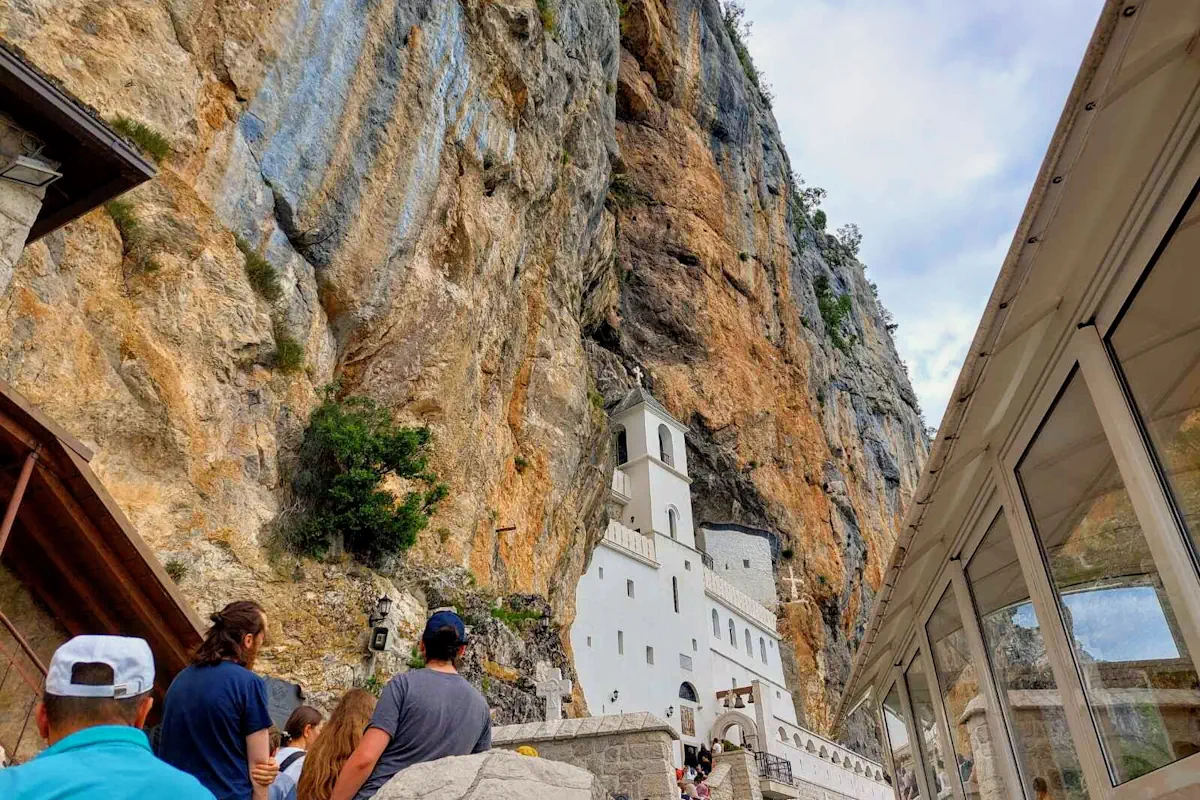
Montenegro’s White Miracle
The Monastery Carved into the Clouds
Embedded directly into a vertical cliff face 900 meters above the Bjelopavlići Plain, Ostrog is an architectural marvel that defies gravity. As one of the most visited pilgrimage sites in the Balkans, it serves as a bridge between faiths, drawing over 100,000 Orthodox, Catholic, and Muslim visitors every year.
The Legacy of St. Basil
Founded in the 17th century by Archbishop Basil, the monastery was built into three natural caves that previously housed an ascetic hermit. Following his death in 1671, Basil was canonized as Sveti Vasilije Ostroški. Today, his well-preserved relics rest within the Crkva Vavedenja (Church of the Presentation), a small cave chapel adorned with 17th-century frescoes painted directly onto the raw rock surface by Master Radul.
The complex is divided into the Lower and Upper Monastery. While many tourists drive between the two, pilgrims often make the steep 2 kilometer ascent barefoot as a sign of devotion. The bright white facade of the Upper Monastery, visible from miles across the valley, remains the definitive image of Montenegrin faith and resilience.
Did you know?
The frescoes in the Crkva Časnog Krsta (Church of the Holy Cross) were painted in 1667. Because they were applied directly to the irregular cave walls, they have survived centuries of moisture and temperature changes that would have destroyed standard plaster based art.
Insider Tip:
Look for the “Vine of Life” growing from the stone where St. Basil passed away; locals believe its fruit carries miraculous properties.
The First Stop
Donji Manastir: The Lower Monastery
The 19th century Holy Trinity Church serves as the heart of the lower complex.
Built in the 19th century, the Donji Manastir (Lower Monastery) centers around the Crkva Svete Trojice (Holy Trinity Church). Unlike the quiet, cave-bound chambers of the upper cliffs, this is a vibrant parish church where residents from nearby villages gather for liturgies, baptisms, and weddings.
Inside, the walls are covered in vivid, colorful frescoes. While photography is strictly prohibited, the visual experience of the iconography is worth the stop. Most visitors use this as their staging ground before the final ascent, as the primary pilgrim dormitories and accommodations are located just a short walk from the church gates.
The Natural Spring
Located directly behind the church is a natural mountain spring. It is a local custom to fill water bottles here with fresh mountain water before beginning the hike or the drive to the Upper Monastery.
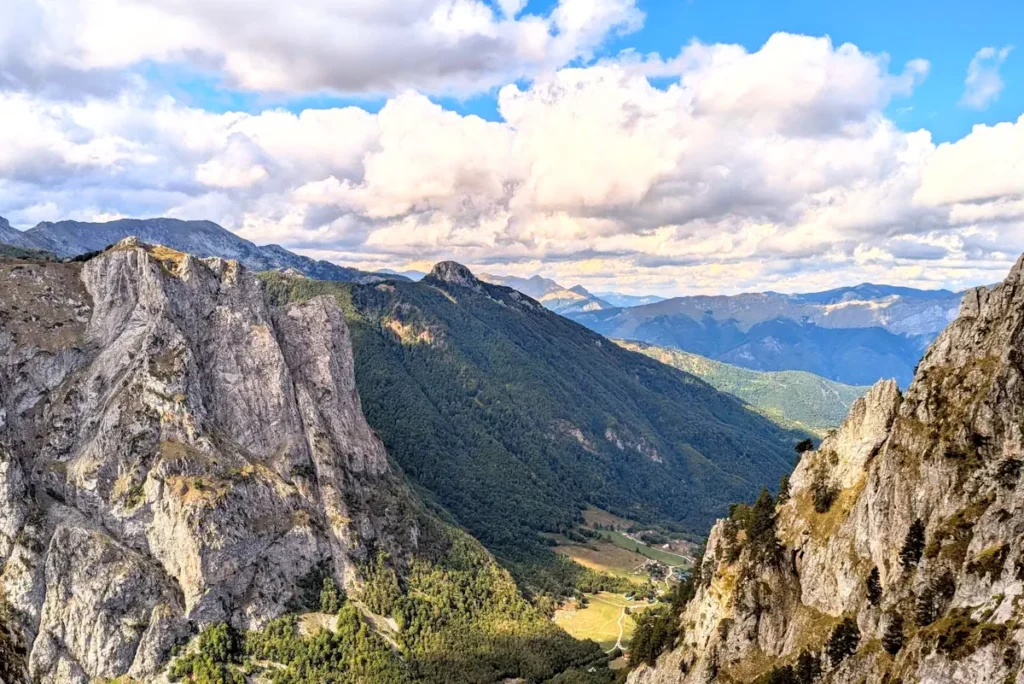
Positioned just past the first switchback of the upper trail, this stone circular plateau marks the first major clearing in the forest. Rather than looking toward the monastery, this vantage point forces you to turn around and face the staggering expanse of the Bjelopavlići Plain. It is the definitive spot to appreciate the sheer height of the cliffs you are traversing.
The deck is the premier location for capturing the Zeta River winding through the valley floor. It provides a quiet moment of horizontal vastness before you continue the vertical climb toward the sanctuary gates.
The Journey Upward
The Ascent to the Cliffs
The path connecting the two monasteries is a physical manifestation of the pilgrimage itself. Most visitors choose between the winding paved road or the traditional forest path. This steep stone stairway cuts directly through the woods and takes between thirty minutes to a full hour to complete. Because of the intense incline, it requires a reasonable level of fitness (especially during the peak heat of July and August).
As you approach the gates of the Upper Monastery, you may notice some pilgrims walking out of the church areas backward. While this is a traditional sign of deep respect for the Saint, it is a personal choice and not a mandatory requirement for tourists. You will also see many people seeking healing for illness or fertility, as the site of the Saint’s passing remains a beacon of hope for believers worldwide.
Important: St. Basil’s Feast Day
The monastery celebrates its most significant event on May 12th every year. This marks the Saint’s death on April 29th (Orthodox calendar). If you visit during this time, expect massive crowds and a deeply spiritual atmosphere that transforms the entire mountain.
Summer Driving Tip
In mid-summer, avoid the hike by parking at the secondary lot further up the mountain. From there, it is only a 200-meter walk to the upper entrance. This is highly recommended to avoid heat exhaustion on the forest trail.
The Holiest Site
Gornji Manastir: The Upper Monastery
Crkva Vavedenja Bogorodice
Church of the Presentation
Accessible through a tiny entrance that requires most visitors to bow down, this cave chapel houses the reliquary glass coffin of Sveti Vasilije Ostroški. The relics are believed to possess miraculous powers and show no signs of decay. This intimate room is the heart of the pilgrimage, where a monk watches over the saint while a priest gives blessings in Serbian or Slavonic church language.
Note: Customarily, pilgrims donate items like clothes or drugstore products for the monks here.
Crkva Časnog Krsta
Church of the Holy Cross
Located on the upper floor of the monastery, this cave church dates back to 1665. It is world-renowned for its vivid frescoes painted directly onto the pure rock surface by the Serbian Master Radul. The church takes its name from the belief that it contains a fragment of the original cross of Jesus. These paintings have miraculously survived centuries despite being exposed to the natural cave environment.
Artistry: Look for the depictions of Sveti Vasilije and Sveti Sava.
Planning Your Arrival
Getting to the Cliffs
The Scenic Route
While there is a new highway, we highly recommend taking the old road from Podgorica via Danilovgrad. This winding route is far more rewarding, especially if you rent a car to explore at your own pace. Along the way, you will pass several small roadside stalls where you can pick up local produce directly from the farmers.
Expert Tip: We recommend using Discover Cars to compare local rental rates; they offer the most transparent insurance options for mountain driving.
For those arriving by rail, the Dabovići train station is the best budget-friendly option at just 2.40 Euro from Podgorica. From this stop, it is a manageable 2.2 kilometer walk (approximately 45 minutes) to reach the Lower Monastery.
Pre-Booked Tours & Private Hire
For a stress-free experience, we recommend booking an organized tour. Choose between a focused pilgrimage to the monastery or a full-day grand loop that includes Durmitor National Park and the Tara Canyon.
The humble station sign: a landmark for pilgrims arriving by the local rail line.
Gastronomy & Local Flavors
Where to Dine & Shop Local
Gostionica Ostrog Podstijene
Located directly beneath the sheer Ostroške Grede cliff face, this traditional tavern is famous for its warm hospitality and hearty Montenegrin portions. It is the perfect spot for a slow lunch of Ćevapi or grilled river trout after the morning ascent.
Restoran Dobrina
A local favorite tucked along the valley route, Dobrina is the definition of rustic charm. This is the kind of place where the owner doesn’t speak a word of English, but hospitality translates perfectly through a glass of chilled, homemade blueberry juice and a greeting from the resident house donkey.
The atmosphere is unapologetically authentic: traditional Zeta meat dishes and crusty, home-baked bread that tastes like it came straight from a family kitchen. It is an essential stop for those who value character over fancy menus, though you’ll want to come prepared with plenty of Euros: this is a strictly cash-only affair.
Overnight Experience
Accommodations & Dormitories
The Monastery Konak
For the most authentic experience, you can stay in the monastery dormitories (Konak). These are simple, communal rooms located at both the Lower and Upper complexes. Blankets are provided, but the experience is one of spiritual humility rather than luxury. During warmer months, the experience often spills onto the stone terraces, where it is common to see pilgrims sleeping outside on mattresses under the cliffs.
Note: Beds are allocated on a first-come, first-served basis.
Hotel Sokoline
If you prefer modern comfort, Hotel Sokoline is the premier choice in the vicinity. The rooms feature balconies that appear to hang directly over the valley, offering spectacular views of the Zeta River. It is the perfect retreat for those who want to experience the mountain’s energy while enjoying a private terrace and high-end amenities.
Book Your StayNot staying at the cliffs? Explore the best-rated hotels in Podgorica, just 45 minutes away.
Faith & Folklore
Miracles of Sveti Vasilije
The Pear Seed & The Parsley
Local lore is filled with tales of the Saint’s power. One famous story recounts Sveti Vasilije throwing a pear seed over the balcony, only for a mature tree to sprout from the bare rock overnight: half in blossom and half bearing fruit in the dead of February. Another tells of a bird delivering parsley seeds to the Saint in his beak, allowing a lush garden to grow in a dark corner of the cliff with neither light nor water.
The Senator’s Dream
In a more modern account, former US Senator William Barr sought healing at Ostrog in 1970 after losing his legs and suffering chronic pain. After seeing a photo of the monastery that matched a recurring dream, he traveled to the Zeta Valley. Following multiple pilgrimages between the lower and upper churches, his pain miraculously improved (he returned home to Illinois as a lifelong advocate for the Saint’s healing powers).
Common Questions
Do you need tickets for Ostrog Monastery?
Entrance to the entire complex is free of charge. Donations are accepted but never required by the monks.
What is the dress code for visitors?
Both men and women must cover their shoulders and knees. Long trousers for men and skirts for women are preferred. If you are unprepared, the monastery usually provides wraps at the entrance to the Upper Monastery. Additionally, sturdy walking shoes are highly recommended over sandals or casual beach-type flip-flops; the latter are often frowned upon in the sanctuary and offer little grip on the steep, polished stone paths.
Can non-Orthodox people visit the monastery?
Yes. Ostrog is a site of pilgrimage for people of all faiths (Orthodox, Catholic, and Muslim alike). Everyone is welcome as long as the site’s sanctity and dress code are respected.
Is there transport between the Lower and Upper Monastery?
If you prefer not to hike the forest path, small shuttle vans run frequently between the Lower and Upper parking lots for a small fee (usually around 1 or 2 Euro). This is a great option for those with limited mobility.
What is the best time to visit?
To avoid the peak crowds and the intense heat of the Bjelopavlići Plain, visit during the shoulder season: May, June, or September. Weekdays before 9:00 AM are generally the quietest times.
Are photos allowed inside the churches?
Photography is strictly prohibited inside the cave churches and the Holy Trinity Church to maintain the sanctity of the site. Photos are permitted on the exterior terraces and the circular observation decks.
Should I bring gifts for the monks?
It is a long-standing tradition to bring small offerings such as sugar, coffee, soap, or hand-knit socks. These are placed in designated areas near the reliquary of St. Basil as a gesture of respect and support for the monastery.
Expand Your Horizon
Continue Your Montenegrin Journey
Explore the historic valleys and glacial peaks beyond the Zeta highlands.
Wild Durmitor
Venture further north to the UNESCO-listed peaks, glacial lakes, and the deep canyons of Durmitor.
Explore the North →The Capital: Podgorica
Just an hour from the cliffs, the capital offers a mix of Ottoman history and modern Balkan life.
Discover the City →Return to the Bay
Descend from the mountains to wander the limestone streets of world-famous Kotor, Perast, and beyond.
Visit the Coast →