
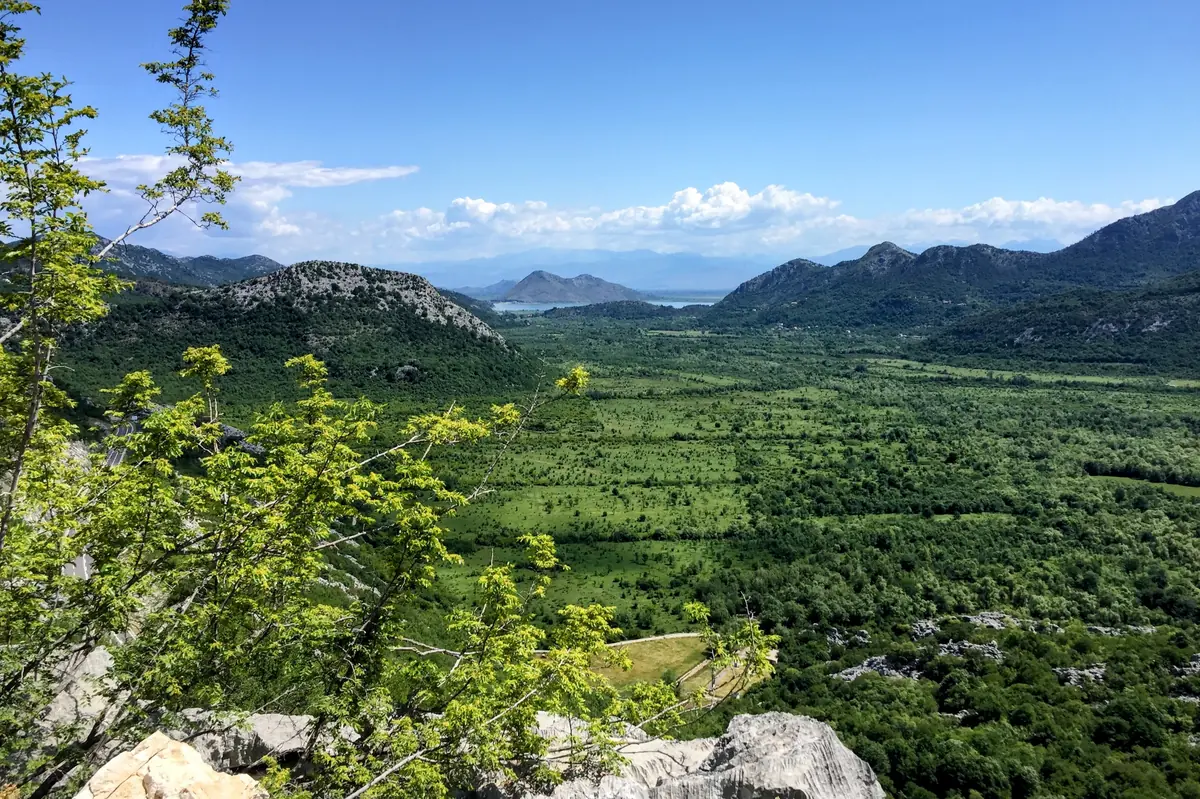
While the coast belongs to the sun, the Crmnica valley belongs to the vine. This small pocket of land between the mountains and Lake Skadar is the ancestral home of Vranac, a grape so dark and potent it was historically known as “Black Wine.” To walk the Crmnica Wine Road is to enter private stone cellars where the traditions haven’t changed in five centuries.
01
The Gateway: Virpazar
Every journey into Crmnica begins in Virpazar, the old-world portal where stone bridges lead the way into the heart of wine country. These ancient stone arches once funneled heavy oak barrels from the high vineyards down to the lake’s edge.
Local Insight: Before heading into the hills, pick up supplies at the local market. For a tasting just outside the center, visit Winery Cermeniza to sample regional vintages.
02
The Scholar’s Soil: Boljevići
Defined by noble heritage, Boljevići was the ancestral seat of the Plamenac family. The vineyards here produce a refined Vranac, traditionally aged in deep stone konobas.
Recommended Tasting:
Winery Kalimut — A small, family-run cellar where the Vranac is as deep as the history of the house.
03
The Railroad Village: Limljani
Limljani’s mineral-rich soil produces the smoothest Vranac in the region. This village is home to the sliding Church of Sveti Toma and a history of unlikely railroad record-breaking.
Recommended Tasting:
Winery Klisić — One of the most established labels in the village, offering a panoramic view of the vineyards alongside their award-winning wines.
04
High Heritage: Donji Brčeli
Home to the 15th-century Monastery of St. Nicholas and the tomb of the “Fake Tsar,” Šćepan Mali. The monks here have cultivated grapes on these steep slopes for generations.
Recommended Tasting:
Winery Kopitović — Located at the foot of the village, this cellar is renowned for its traditional production methods and authentic hospitality.
05
The Stone Soul: Godinje
The journey concludes in Godinje, where stone houses are connected by ancient wine cellars. It is the spiritual home of the Vranac grape.
Featured Experience: Experience a traditional tasting at the heart of the village.
Book a Tasting at Garnet Winery
Book a Tasting at Garnet Winery
06
The Effortless Choice
Navigating the narrow stone roads of Crmnica is best done without the worry of logistics. For a curated, safe immersion into the region’s best family cellars, a private guided tour is the ultimate way to experience the wine road.
Culture & Customs
Insider Etiquette for Crmnica Cellars
01. Call Ahead
Most wineries are active family homes. A quick phone call or Instagram message ensures the family is there to open the konoba (cellar) and that you are not interrupting the harvest.
02. The Mandatory “Meze”
Never drink Vranac on an empty stomach. Always accept the platter of pršut, mountain cheese, and figs. It is a gesture of hospitality designed to balance the heavy tannins of the local wine.
03. Small Batch Support
Tasting fees are often waived if you purchase a few bottles. Since these are small-batch productions, paying €15 to €25 for a vintage you cannot find anywhere else in the world is a true investment.
Autochthonous Varieties
The Grapes of the Lake
The primary DNA of the Crmnica wine hills.
Vranac
The dominant force. An “inky” red with high tannins and notes of sour cherry, blackberry, and forest floor. It is the heart of every Montenegrin konoba.
Kratošija
Historically vital and genetically identical to Zinfandel. It is often blended with Vranac to add elegance, higher acidity, and spice to the bottle.
Krstač
A rare indigenous white grape that yields a dry, crisp, and mineral-heavy profile. It is the perfect saline-rich pairing for Lake Skadar’s carp or trout.
Žižak
The “forgotten” coastal white that finds its best expression in the hinterlands. Expect a nutty, honeyed aroma with more body than Krstač.
The Route
The Perfect Wine Day
A logical loop through the heart of Crmnica.
09:30 AM — The Gateway: Virpazar
Start with a coffee on the lakefront and visit Besac Fortress for a morning overview of the valley and the entire Crmnica amphitheater you are about to navigate.
11:30 AM — Noble Heritage: Boljevići
A short drive from the center brings you to Boljevići. Stop at a local konoba to sample Vranac in the ancestral seat of the Plamenac family.
01:30 PM — Mineral Soil: Limljani
Navigate the high road to Limljani. Visit the “sliding church” of St. Thomas and enjoy a long, slow lunch of smoked carp and local cheese paired with the village’s famously smooth red.
04:00 PM — High Heritage: Donji Brčeli
Ascend to the highest point of the circuit. Explore the Monastery of St. Nicholas and taste the mountain-influenced wines produced in this unique microclimate.
06:30 PM — The Final Glass: Godinje
Finish the day in the upper core of Godinje. Walk through the connected wine cellars and end with a private tasting at Garnet Winery as the sun sets over the lake.
