

Montenegro’s Byzantine Pompeii
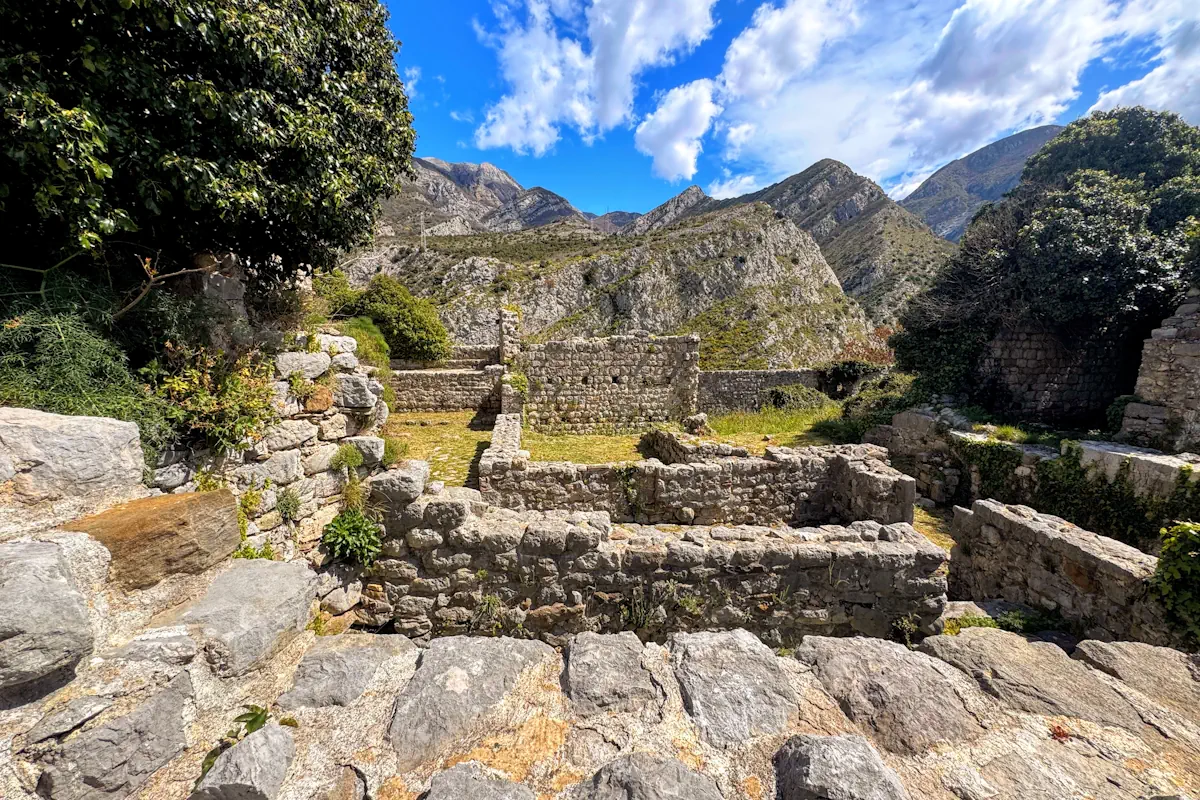
Towering above verdant, lush landscapes on a rugged rocky outcrop, Stari Bar is a ghost city where Byzantine arches meet Ottoman minarets. Abandoned in the wake of the 1979 earthquake, this sprawling open-air museum – now reclaimed by Mediterranean cypresses and ivy – remains the country’s most significant archaeological treasure, offering a silent, sun-drenched walk through hundreds of years of Mediterranean power struggles.
Visit Intelligence
Stari Bar Planning Essentials
Opening Hours & Cost
Hours: 08:00 – 18:00 daily.
Price: €5 Adults / €1 Children.
Tip: Maps are available at the entrance; credit cards are hit-or-miss.
Parking & Arrival
The main lot is €0.60/hour. Free parking is available on the other side of the road near the basketball court. A 5-minute drive from Bar city center.
Cultural Timing
Visit on Friday for the open-air market, or during summer evenings for theater performances within the ruins.
Canyoning & Nature
Stari Bar is the gateway to the Medjurec Canyon and the 2,240-year-old Olive Tree.
Discover Active Stari Bar →What to See within the Walled City
With over 250 structures scattered across the stone-hewn precipice, Stari Bar is a labyrinth of discovery. Here are the essential stops on your ascent through the ruins.
The Threshold
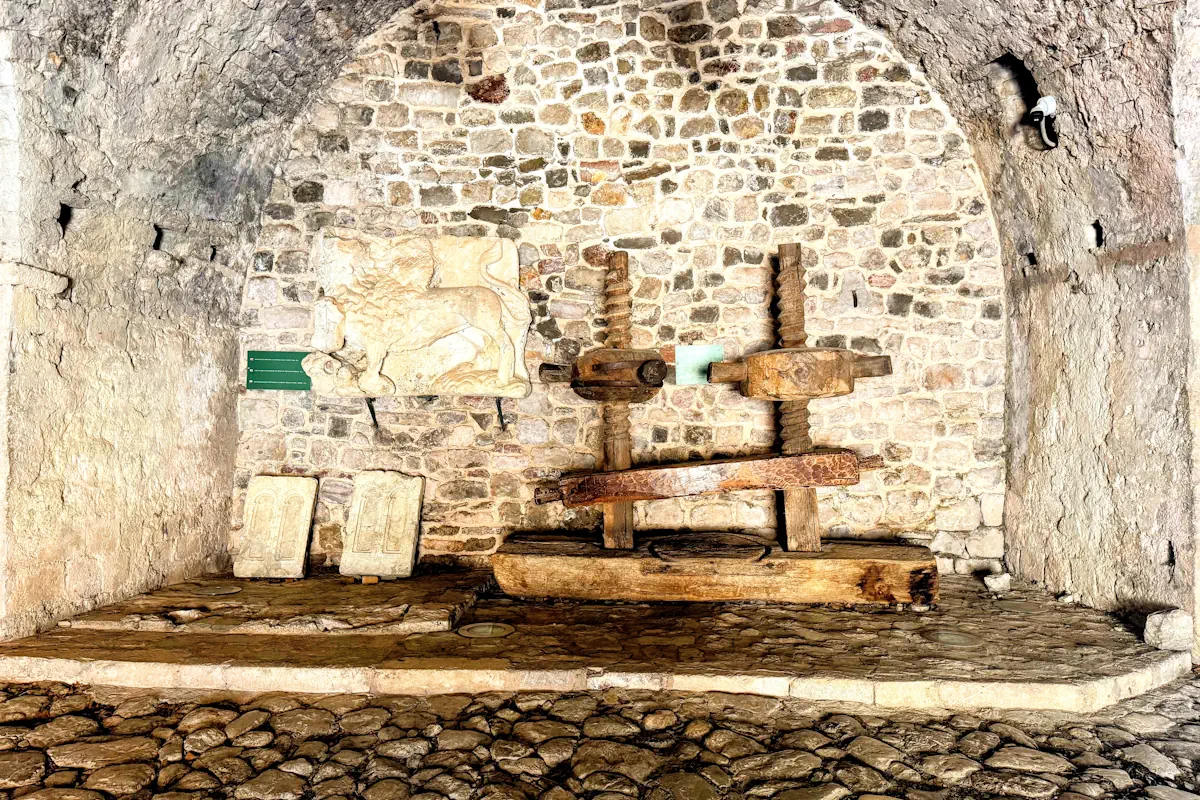
Guardian of the Gate
You enter the once well-guarded fortress through a single city gate, which pierces a small entrance into the giant city walls originating in the 9th century. High above the exterior portal, the weathered relief of the Lion of Venice still stands watch. Upon stepping through the cool stone archway, you are immediately greeted by the heavy, gnarled timber of a centuries-old olive press. This massive wooden screw and beam mechanism sits alongside ancient stone tablets, serving as a silent testament to the eras when ‘Antivari’ was both a vital military stronghold for the Serene Republic and a thriving capital of liquid gold.
Feat of Engineering
The 17-Arch Aqueduct
Built during the 16th and 17th centuries, this masterpiece used seventeen stone arches to bring fresh water from the mountains directly into the town. It was the city’s lifeline for 300 years, stretching over 3 kilometers and standing as one of the most significant Ottoman structures in the entire Adriatic.
The Beacon
The Sahat-Kula
Standing tall above the stone blocks, the Ottoman Clock Tower (Sahat-Kula) is the town’s most iconic silhouette. Built in 1753, it served as both a timekeeper and a landmark for the olive merchants approaching from the valley below.
Digital Guide: To unlock deeper historical layers as you explore, we recommend downloading the staribar.app. It provides an interactive map and narrated insights for each major structure mentioned here.
Military Might
The Upper Citadel
Perched 150 meters above sea level on the highest northern point, the Citadel – known locally as Tatarovica – was the final line of defense. It houses the remains of the old ammunition depots and defensive bastions, offering the most dramatic views of the Rumija mountains.
Sacred Ground
The Silent Sanctuaries
Of the city’s ten churches, the 14th-century St. Veneranda and the Gothic St. Catherine (15th century) remain remarkably intact. They are joined by the Church of St. John the Baptist, a 1927 new build easily identified by its gabled stone roof and barrel-vaulted ceiling.
Renaissance Ruins
The Bishop’s Palace
Built between the 14th and 16th centuries, this residence is attributed to the Balšić dynasty. Its most impressive feature is the sea-facing stone facade, defined by its high Gothic windows and a semi-circular portal. Once featuring twenty rooms and a grand central hall, the former home of the town’s archbishops now serves as an archaeological museum showcasing local pottery and ceramics.
Social Life
The Ottoman Bathhouse
This 18th-century bathhouse is defined by its domed roof and steam rooms. Look up to see the original circular openings in the ceiling, which were designed to provide ventilation and natural light. It remains a clear example of the social rituals and health practices that shaped Bar for over three centuries.
The Gateway
The Old Customs House
Located near the main entrance, this 15th-century Venetian building is a rare example of preserved Renaissance architecture in Montenegro. While it later served as a residence, it was originally the economic heart of the city where every liter of olive oil and shipment of silk was processed for Adriatic trade.
Cultural Tapestry
Before entering the fortress, you will pass through a living intersection of faiths. The 17th century Omerbaša Mosque and its historic mausoleum stand just steps from the Main Gate, while the nearby Škanjevića Mosque, with its striking 22 meter stone minaret, remains a vibrant center for the local Sufi heritage.
Stari Bar History in 60 Seconds
800 BC – 6th Century
The Byzantine Dawn
Stari Bar’s history begins with Byzantine sailors stepping ashore in the glory days of the Eastern Roman Empire. While built atop ancient Illyrian roots, the fortified town likely emerged in the 6th century as a rehabilitated Roman ‘castrum.’
First documented as Antibareos by Emperor Constantine VII in the 10th century, the city reached its turning point in 1042. Following the Battle of Tuđemili, Bar became the political and spiritual heart of the kingdom of Duklja.
10th Century – 1042
Rise of a Capital
1443 – 1571
Venetian Antivari
Under the Serene Republic, the town gained its present urban plan and formidable fortifications. These heavy stone walls and strategic bastions transformed Antivari into a key military stronghold and a vital link in the Venetian maritime network.
Ottoman rule reshaped the skyline with a 17-arch aqueduct, bathhouses, and powder mills. During this 307-year occupation, the olive oil industry grew to massive proportions, commanding over 100,000 trees.
1571 – 1878
The Ottoman Century
1878
The Liberation
Prince Nicholas I reclaimed Bar for Montenegro in 1878. This victory is marked by the stone monument located between the main parking lot and Konoba Akvadukt.
A thousand years of history ended in 1979 when a catastrophic earthquake severed the water supply. The last suitcases were zipped up as the final inhabitants evacuated to the coast below.
1979
The Great Exodus
Today
The Living Ruin
Stari Bar is now a vibrant cultural landmark. After climbing the citadel, visitors can enjoy the region’s best dining scene in the cobbled bazaar, the perfect spot for traditional flavors and wild pomegranate juice.
The Soul of the Valley
The magic of Stari Bar does not end at the fortress gate. The surrounding valley is home to living legends and hidden natural corridors that offer a deeper connection to the land.
Stara Maslina
At over 2,250 years old, this is one of the oldest olive trees in the world. It is a biological monument, a gnarled and massive presence that has survived every empire mentioned in the chronicle above.
The Friday Market
If you visit on a Friday, the cobblestone street transforms into an open-air bazaar of pomegranate syrup and sage honey.
Don’t Miss: Walk down to the 18th-century Mostine Stone Bridge, the hidden Ottoman gateway to the valley floor.
Canyons & Waterfalls
The rugged terrain behind the walls hides the emerald Rikavac and Međureč canyons. Rikavac is perfect for beginners, while Međureč offers world-class technical drops.
Stara Maslina: A biological monument that has stood for over 2,250 years.
Where to Linger
The Palate
Konoba Kula
Just steps from the citadel gates, Konoba Kula has redefined the Old Town’s culinary heritage. Their menu masterfully balances tradition with precision – don’t miss the Kula beefsteak in herb-infused olive oil or their signature lamb peka served with creamy kajmak and a light urnebes mousse.
Hungry for more? Explore our curated selection of the best restaurants in Bar, Montenegro.
- — Must-Try: Pomegranate Beer & Traditional Breakfast with Priganice
- — Vibe: Refined stone terrace overlooking the ancient city walls
The Stay
Stara Čaršija Resort
A masterpiece of stone and wood, this boutique resort sits at the entrance of the old bazaar. It blends Ottoman soul with 5-star luxury, featuring a world-class Turkish Hammam and terraces that look directly into the heart of the citadel.
- — Highlight: Panoramic rooftop pool overlooking the ruins
- — Wellness: Authentic oriental spa & wellness rituals
Planning Your Pilgrimage
The Journey
Stari Bar is located 4km inland from the modern port city of Bar. If arriving from Budva (1 hour) or Ulcinj (30 mins), follow the signs for “Stari Grad.” We recommend parking in the lower paved lots; the walk up the cobbled “Čaršija” (market street) is steep but essential for the full experience.
Culture & Events
The town is a stage for the Barski ljetopis (Bar Chronicle) festival during July and August. Many of its theater performances and concerts are held within the citadel ruins under the stars. In late autumn, usually November, the town pivots to its agricultural roots with the Maslinijada festival, celebrating the local olive harvest.
The Kit
This is a true archaeological site. The stones are polished smooth by centuries of footsteps and can be extremely slippery. Wear sturdy walking shoes or sneakers; leave the sandals for the Bar Riviera beaches. Expect to spend at least 2 to 3 hours within the walls.
“Stari Bar is not just a destination; it is a conversation between the mountains and the sea, written in stone over two thousand years.”
Expand Your Horizon
Beyond the Old Citadel
Continue your journey through the diverse landscapes of Southern Montenegro.
Lake Skadar
A short drive over the Rumija mountains leads to the Balkans’ largest lake and its famous wine serpentines.
Explore the Lake →Ulcinj & Long Beach
Head south to discover an oriental flair, pirate history, and the endless sandy stretches of Velika Plaža.
Discover Ulcinj →The Budva Riviera
Journey north to Montenegro’s best beaches, cozy fishing villages, luxury resorts, and vibrant nightlife.
Discover the Budva Riviera →