

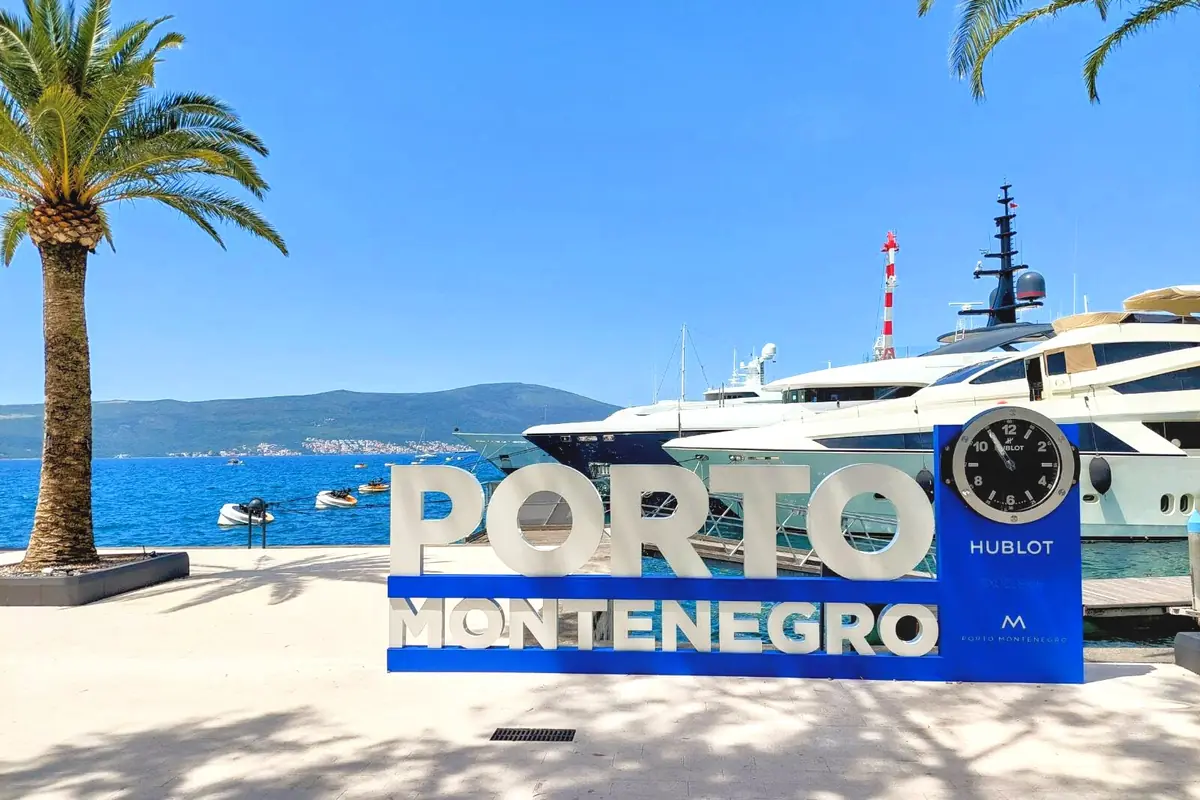

Not too long ago, Tivat was the “forgotten” corner of the Boka Bay, a humble naval town defined more by industrial shipyards than scenery. That changed forever with the birth of Porto Montenegro. Today, Tivat is one of the most cosmopolitan destinations on the Adriatic – a place where 100-meter superyachts dock alongside local fishing boats, and designer boutiques sit just steps away from traditional stone konobas.
Whether you are flying into the local airport for a luxury getaway, exploring the Cold War secrets of the Naval Heritage Collection, or hiking the ancient olive groves of Gornja Lastva, Tivat offers a polished, modern rhythm unique to Montenegro. While Kotor is famous for its medieval walls and Herceg Novi for its botanical gardens, Tivat is the “New Montenegro”: refined, accessible, and surprisingly soulful.
Best For
Luxury shopping, yacht enthusiasts, family-friendly strolls, and airport convenience.
The Vibe
“Monaco-meets-Montenegro” – glitzy, polished, and remarkably cosmopolitan.
Transport
Completely flat and pedestrian-friendly; 5 minutes from Tivat Airport (TIV).
Must-Try
The “Pine Pita”: Tivat’s famous custard cream cake, best enjoyed with a ‘dojč’ or espresso.
Tivat vs. Kotor vs. Budva: Which is for you?
| Feature | Tivat | Kotor | Budva |
|---|---|---|---|
| Best For | Luxury, families, and seamless travel. | History, UNESCO sites, and hikers. | Nightlife and large sandy bays. |
| Landscape | Wide, palm-lined, and flat. | Vertical, enclosed, and dramatic. | Urban, high-energy, and open. |
| Walkability | 10/10 (Paved & stroller-friendly). | 4/10 (Steps and cobbles). | 7/10 (Busy urban corridors). |
| Crowd Level | Moderate (Spacious harbor). | Extreme (Cruise ship days). | High (Peak peak summer). |
While Kotor feels like a museum and Budva like a party, Tivat is a lifestyle. Its appeal lies in its spaciousness and the effortless transition from high-end boutiques to hidden swimming spots.
Tivat Planning Cheat Sheet
Where to Stay
The Regent Porto Montenegro (The gold standard for luxury) or Hotel Pine (The iconic local choice on the Riva).
View Best Rates →Arrival & Transport
Fly to Tivat Airport (TIV). It is only 5 minutes away. Pre-book a transfer for approx. €15 to avoid airport taxi surcharges.
Book Transfer →Top Experience
The Submarine Tour – Climb inside the P-821 Heroj. It’s a rare Cold War relic offering a stark contrast to the yachts nearby.
Book Submarine Ticket →The View
Visit Verige 65 or the village of Gornja Lastva for a panoramic bird’s-eye view over the narrowest part of the bay.
— Local Resident Tip
The Tivat Timeline
3rd Century BC
Queen Teuta’s Summer Retreat
Legend says the Illyrian Queen chose Tivat for its unique microclimate, naming the town after herself.
Wealthy Kotor noble families build fortified summer palaces like Buća-Luković, turning Tivat into a medieval “Hamptons.”
14th Century
The Aristocratic Era
1889 – 2006
The Naval Shipyard
The Austro-Hungarian “Arsenal” is founded, becoming a massive Yugoslav naval base for over a century.
The shipyard is reborn as Porto Montenegro, transforming Tivat into the superyacht capital of the Adriatic.
2007 – Present
The Superyacht Revolution
Tivat Navigation Map
We’ve mapped out the essential landmarks, from the superyacht docks to the hidden village paths. Pro Tip: Open this map while signed into your Google account. It will automatically save to your “Saved” or “You” tab in the Google Maps app. To find it later, tap your profile icon > Saved > Maps—now you can see all our Tivat pins while you’re walking the Riva!
For over a century, Tivat’s air was filled with the clanging of metal and the scent of diesel. As the “Sava Kovačević” base, it was the industrial backbone of the Yugoslav Navy. When the shipyard closed, the town faced an uncertain future – until 2007, when the vision of a “Monaco of the Balkans” began to take shape.
Today, Tivat is a modern, master-planned success story. Strict zoning laws have kept the skyline low-rise and elegant, ensuring that the eclectic Mediterranean architecture never competes with the natural majesty of the Vrmac ridge. It is a destination with a high sense of self-esteem, effortlessly drawing an international community of yachties, digital nomads, and luxury travelers.
Porto Montenegro: The Nautical Village
Porto Montenegro is the undisputed jewel in Tivat’s crown. As the first and largest superyacht marina in the Adriatic, it features 450+ berths with the capacity to dock vessels up to 250 meters in length. It is the place to “see and be seen” – offering a level of manicured Adriatic elegance that feels worlds away from the tangled olive groves and salt-worn ruggedness of the traditional Montenegrin coast.
The village design is a masterclass in detail. You’ll find outdoor water features, scenic mood lighting, and polished stone streets that feel incredibly sophisticated. It doesn’t feel like a typical “shopping mall” – it feels like a living, breathing coastal village designed for the global elite.
Resident Insight: Beyond the Front Row
Most visitors never leave the main harborfront, but the real charm is found in the “back streets” behind the Regent Hotel. Here, you’ll find quieter cafes, artisan bakeries, and small boutiques like Vilebrequin tucked away from the main crowds. It’s where the locals and yacht crews go for a morning espresso.
Naval Heritage: The Cold War Submarines
Just a short walk from the glitz of the superyacht berths lies a stark reminder of Tivat’s industrial and military past. The Naval Heritage Collection is housed in a meticulously restored 19th-century sawmill and serves as one of the town’s most important cultural anchors.
The P-821 Heroj: A rare chance to step inside a Cold War relic.
The undeniable stars are the two Yugoslav-era submarines sitting on the dry dock: the massive P-821 Heroj and the smaller “pocket” submarine, P-912 Una. This is one of the few places in Europe where you can actually climb inside a fully preserved Cold War vessel to see the torpedo tubes and working periscope.
Visitor Information
- Entry Fee: Approx. €7 for the submarine and museum (€2 for museum only).
- Family Tip: It is highly interactive; kids are usually allowed to turn the wheels and dials.
- Constraint: The hatches are narrow; those with claustrophobia may prefer the outdoor exhibits.
Explore the full list of local attractions in our guide to the best things to do in Tivat.
The Pine Embankment: Tivat’s Social Heart
While Porto Montenegro represents the “New Tivat,” the Pine Embankment (locally known as the Riva) is where the town’s traditional soul resides. This wide, palm-lined promenade is the social center where the most important local tradition takes place: the đir, a leisurely ritual where generations of families meet to walk the waterfront, eat ice cream, and trade stories over the sound of gentle waves lapping against the stone.
The landmark of the Riva is the Jadran, a stunning 1933 sailing ship that serves as the training vessel for the Montenegrin Navy. At sunset, the entire promenade glows in shades of orange and purple, making it the most photographed spot in the city. Grab a seat at Marquise, Propela, or Hotel Pine’s terrace to experience Tivat as the locals do.
Tivat Beaches: From Infinity Pools to Hidden Coves
Tivat’s coastline is a mix of urban sophistication and wild Adriatic beauty. Unlike the long, crowded stretches of Budva, Tivat offers distinct “zones” – each catering to a very different kind of day by the water.
Exploring by Water
In Tivat, the sea isn’t just a view—it’s the primary highway. To truly see the Boka Bay, you need to leave the pavement behind.
- The Blue Cave Express: Speedboat tours depart daily from the Porto Montenegro docks. It’s the fastest way to reach the open sea and the luminous Blue Cave.
- The Perast Shuttle: Several local skippers offer “taxi boat” services to the island of Our Lady of the Rocks. It’s a more intimate, scenic alternative to the bus.
- Solar Power Cruising: Look for the EcoBoats at the Pine Riva. These silent, electric boats are the most sustainable way to hop across to the Luštica Peninsula.
The Soulful Heights: Vrmac & Gornja Lastva
If Porto Montenegro is Tivat’s face, the Vrmac Ridge is its backbone. This green massif separates the Tivat and Kotor bays, offering a landscape of stone walls, ancient olive groves, and the best panoramic views in Montenegro.
Gornja Lastva: The Living Museum
Perched 300 meters above sea level, this traditional village is a rare example of preserved Mediterranean rural architecture. Walking through its narrow stone paths feels like stepping back 200 years.
- ● The 19th-Century Olive Mill: Still functional and powered by hand, this mill is the village’s pride.
- ● St. Mary’s Church: Dating back to the 14th century, the church terrace offers a jaw-dropping view of the entire Tivat bay.
Pro Tip: Visit in August for the “Lastva Fest,” where traditional folk dances and music bring the village square back to life.
Hiking the Vrmac Ridge
For hikers, the old Austro-Hungarian military roads provide a wide, relatively flat path along the ridge. The highlight is the Vrmac Fortress, a hauntingly beautiful stone ruin from 1860.
The dual-view of Kotor and Tivat from the ridge is the best photo op in the region.
| Trail Difficulty | Moderate (Steady ascent on stone paths) |
| Average Time | 1 hour to Gornja Lastva; 3-4 hours for the full ridge |
| Essential Gear | Sturdy shoes (the stones can be slippery) and 1.5L of water |
Beyond the Town: The Luštica Peninsula
While Tivat is the urban heart of the bay, the Luštica Peninsula – just a 15-minute drive from the center – is its wild, rugged backyard. This is where the Adriatic meets the bay, characterized by ancient olive groves, fortified villages, and some of the cleanest water in the Mediterranean.
Luštica Bay & The Chedi
A second, equally stunning marina village carved into the cliffs of the open sea. It offers a quieter, more “resort” feel than Porto Montenegro, with a beautiful promenade and the 5-star Chedi Luštica Bay.
The Wild Coast: Žanjice & Mirišta
For those seeking the “old” Montenegro. These stone beaches face the open Adriatic and the Mamula Island fortress. The water here is cooler, saltier, and impossibly clear.
Logistics Tip: The Sea Route
During the summer, the road to Luštica can be slow and congested. For a more scenic arrival, we recommend the EcoBoats electric shuttle from the Tivat Pine Embankment. It docks at Bazdanj, where a coordinated shuttle bus takes you directly into Luštica Bay (Marina Village). The boat ticket is roughly €3.90, and the integrated bus transfer is usually included, making it a refreshing 40-minute journey across the bay.
Where to Base Yourself
Tivat is remarkably accessible, but each district offers a different rhythm. Whether you want superyacht glamour or stone-village serenity, here is where to drop your bags.
Resident Tip: If you are traveling with a stroller, the entire 3km stretch from Donja Lastva to the Pine Promenade is completely flat, making it the most accessible walk in the Bay.
The Best Stays in Tivat
Driving to Tivat?
While Tivat is the most “car-friendly” town in the bay, summer congestion and strict “Spider” tow-truck enforcement can make parking a challenge.
READ OUR 2026 TIVAT PARKING GUIDE →Dining & Gastronomy: From Burek to Beluga
Tivat’s food scene is a study in contrasts. Within a single square mile, you can start your morning with a €2 local pastry and end it with world-class Japanese-Thai fusion overlooking a €100-million superyacht. Whether you seek the “white tablecloth” experience of the marina or the rugged charm of a local konoba, Tivat delivers.
The “Power Players” of the Marina
The Local Soul: Authentic Tivat
Big Ben (Seljanovo)
A local institution. Located on the promenade toward Waikiki, Big Ben offers a massive terrace with sunset views. The menu is vast – from burgers to seafood pasta – and the prices remain refreshingly accessible.
Sofi
Located on the waterfront promenade, Sofi is where Italian tradition meets Slavic comfort. While their wood-fired Napoletana pizza is the star, don’t miss their homemade borsch or Georgian Khachapuri. It’s high-quality, soulful food with an unbeatable sea view.
Bistro Pjaca
Located in the heart of the town’s stone piazza, Pjaca is the ultimate neighborhood bistro. Known for its excellent pasta, Mediterranean salads, and welcoming atmosphere, it’s the best place to feel the local pulse away from the marina yachts.
Hungry for more? Read our full breakdown of the city’s culinary scene.
The 15 Best Restaurants in Tivat →Events & Culture
From the high-glitz over-water runways of the International Fashion Festival to the centuries-old Bocce Olympics and vibrant Winter Carnivals, Tivat’s calendar is built on a study of contrasts.
Whether you’re visiting for the Julian New Year peak or the blossoming Wind Festival, there is always a reason to be on the Pine Embankment.
VIEW THE FULL 2026 CALENDAR →Living in Tivat: The Expat & Nomad Perspective
Tivat isn’t just a holiday destination; it is one of the few Adriatic towns that maintains a vibrant, year-round soul. For families and digital nomads, it offers a “Goldilocks” balance: small-town safety with world-class infrastructure.
A Family-First Haven
Widely considered the safest town in Montenegro. The Knightsbridge School International (KSI) provides a full IB curriculum right in the heart of town, making it the premier choice for international families.
The Real Estate Split
From ultra-luxury marina penthouses to the charming stone houses of Donja Lastva, the market is diverse. Seljanovo remains the top pick for those seeking modern apartments with a local rhythm.
Thinking of making Tivat home?
Relocating involves more than just a flight. For professional assistance with Montenegrin residence permits, company formation, and local bureaucracy, visit our experts at:
VISIT ADRIACOM.METivat Essential Guide: FAQ & Logistics
When is the best time to visit?
For the full “superyacht lifestyle,” July and August are peak, but expect heat (30°C+) and crowds. For the best balance, visit in June or September. The water is warm enough for swimming, but the promenades are much more relaxed.
Where should I buy groceries (and what about Sundays)?
For a premium experience, Voli in Boka Place (Porto Montenegro) is the go-to. For local prices, head to Idea, Aroma, or HDL near the highway.
Important: While most shops close on Sundays, new 2026 regulations allow some supermarkets and kiosks at gas stations/transport hubs to remain open during the peak summer season. Always check local listings if arriving on a weekend.
Do I need to register with the police?
Yes. Every tourist must register within 24 hours of arrival and pay the mandatory tourist tax (~ €1.00/day). If staying in a hotel, they do it for you. If in an Airbnb, ensure your host registers you. If they don’t, you must visit the Tourist Info Point on the Riva with your passport. Failure to do so can result in a €200 fine at the airport when you try to leave.
Is the tap water safe?
Yes. Tap water in Tivat follows strict municipal standards. During summer, a slight chlorine taste is common – many locals use a basic filter or opt for bottled water. Note: After periods of exceptionally heavy rainfall, it is recommended to boil tap water or use bottled water for 24–48 hours as a precaution until clarity returns.
How do I get from Tivat Airport (TIV) to the center?
The airport is only 5 minutes away. A licensed taxi should cost no more than €15. To avoid surcharge stress, pre-book a transfer or walk 200m to the main road to catch a passing “Blue Line” bus for approx. €2.
How much is the ferry to Herceg Novi?
The Lepetane-Kamenari ferry is free for pedestrians and cyclists. For a standard passenger car, the price is €4.00 (off-season) – €5.00 (season). It runs 24/7 and is the fastest way to cross the bay.
