

Andreaccio’s Mission: A 9th-Century Legacy
The story of the cathedral began in 809 AD, back when Kotor was a frontier of the Byzantine Empire. A prominent local named Andreaccio Saracenis traveled to Constantinople (modern-day Istanbul) on a high-stakes mission: to acquire the sacred relics of Saint Tryphon. He was successful, returning to Kotor with the saint’s remains and building a modest chapel to house them.
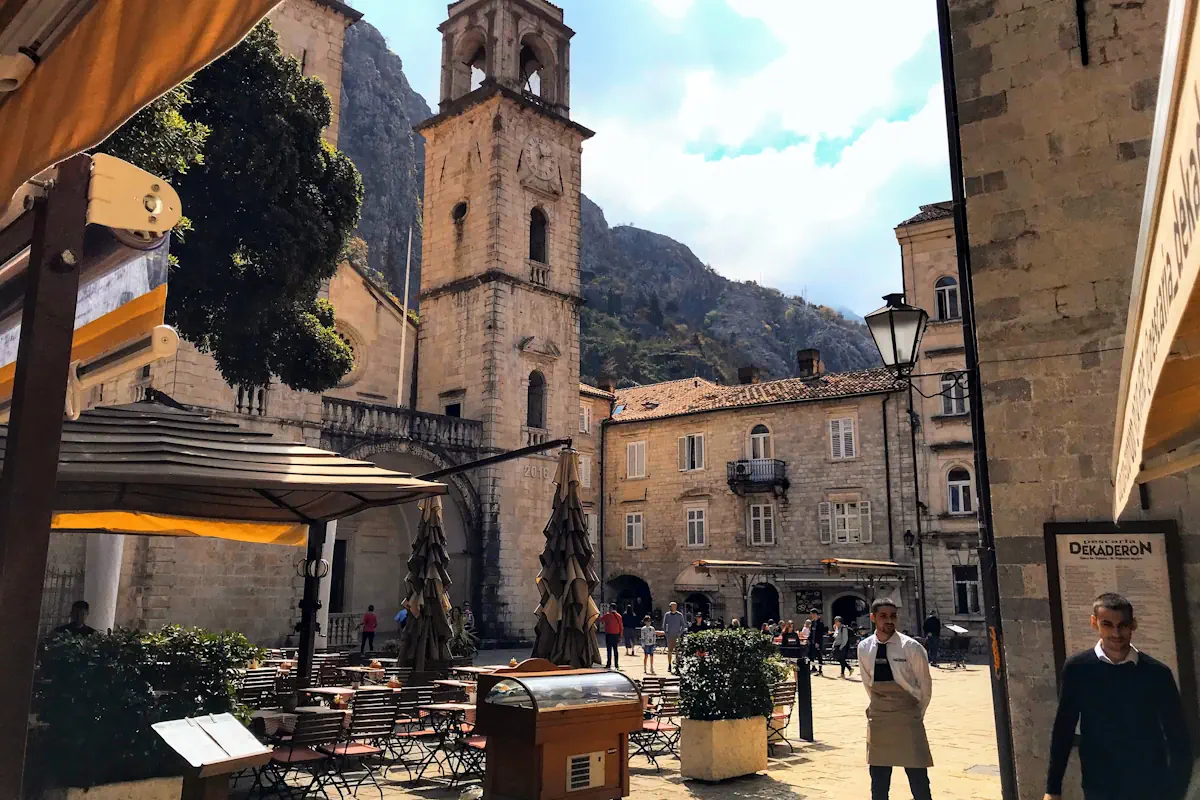
By 1166, Kotor’s prestige had grown so much that the small chapel was replaced by the massive Romanesque cathedral we see today. It was designed to be a “fortress of faith,” a safe sanctuary for the saint’s remnants, which were conserved in a handcrafted silver reliquary casket where they remain to this day.
Over the centuries, nature forced the cathedral to evolve. Following the catastrophic earthquake of 1667, the building was heavily restored, leading to the unique mix of Romanesque, Gothic, and Renaissance styles that define its current silhouette.
