

UNESCO Since
1979
City Walls
4.5 KM Long
Entrance Fee
Free (Town)
Best For
Medieval History
Context & Heritage
2,000 Years of Kotor
Illyrian
Roman
Byzantine
Serbian
Venetian
Kotor’s story is one of survival and strategic brilliance. Nestled in the furthest corner of the Boka Bay, it was originally an Illyrian stronghold before the Romans established Acruvium. However, the medieval architecture you see today – the marble-paved squares and narrow alleys – is a result of the town’s most prosperous era under the Serbian Nemanjić dynasty and the subsequent 350-year rule of the Republic of Venice.
5th Century BC
Illyrian Foundations
The Illyrians first built a fort on St. John’s Hill, establishing a strategic military outpost at the foot of the San Giovanni cliffs.
168 BC – 476 AD
Roman Acruvium
The Romans integrate the town into the province of Dalmatia, laying the first stone fortifications.
6th – 9th Century
Byzantine Fortifications
Emperor Justinian I rebuilds the fortress in the 6th century. By the 9th century, the significant construction of the city walls begins as a defense against maritime threats.
1185 – 1371
The Nemanjić Golden Age
Kotor flourishes as a major Serbian maritime port; St. Tryphon Cathedral is consecrated in 1166.
1420 – 1797
The Venetian Republic
350 years of ‘Cattaro’ – the current walls, gates, and Baroque palaces are completed.
1979
UNESCO Recognition
Following a major earthquake, Kotor is listed as a World Heritage site to preserve its medieval integrity. It is one of several protected gems in the country – Explore all UNESCO sites in Montenegro.
The Nemanjić Era (1185–1371)
During this golden age, Kotor became one of the Adriatic’s most important trading hubs. This period gifted the town its iconic Romanesque and Gothic soul, most notably the St. Tryphon Cathedral and the Church of Saint Luke.
The Venetian Lion (1420–1797)
Facing Ottoman threats, the Venetians reinforced Kotor’s fortifications into the massive system we see today. They left behind the Winged Lion of St. Mark carvings and the grand Baroque palazzi that house today’s boutique hotels.
Step-by-Step Guide
Kotor Old Town Walking Tour
A logical loop through UNESCO heritage. Duration: ~120 Minutes.
Book a Guided Kotor Tour
Stop 1: The Main Entry
Sea Gate & Square of Arms
Built in 1555, the Sea Gate was previously only accessible by water. While the Renaissance pillars remain, look up to see the liberation date (November 21st, 1944) and Tito’s famous quote: “What belongs to others, we don’t want; what is ours, we will never surrender.”
Once inside, you emerge into the Square of Arms, the largest town square. Notice the 1602 Clock Tower and the pyramid-shaped Pillar of Shame, where offenders were once publicly humiliated to strike fear into the hearts of mischief-makers.
Deep Dive: The History of the Square of Arms →
Insider Tip: On the inner vaulted passage, look for the 15th-century stone relief of the Madonna with Child, flanked by St. Tryphon and St. Bernard.
Stop 2: Spiritual Heart
St. Tryphon’s Cathedral
Consecrated in 1166, this Romanesque masterpiece is the symbol of Kotor. Its asymmetrical towers are a result of the 1667 earthquake – the northern tower remains shorter due to a historical lack of funds. Inside, the Relic Chapel holds the silver casket of the town’s patron saint.
Full Guide: Treasures of the Cathedral →
Don’t Miss: Right next to the Cathedral is “Pusti me proći” (Let Me Pass) street. It is so narrow that two people cannot pass each other at the same time.
Stop 3: Aristocratic Quarter
Pima Palace & Maritime Museum
As you move toward Museum Square, you will encounter the stunning 17th-century Pima Palace. Its long, ornate balconies represent the height of Venetian Baroque influence. Directly adjacent sits the Maritime Museum, housed in the early 18th-century Grgurina Palace.
Guardians of Kotor’s naval legacy, the museum entrance is flanked by two 18th-century bronze cannons. Inside, you can explore the history of the Boka Navy, once one of the most powerful maritime brotherhoods in the world.
Visitor Info: The Maritime Museum offers a great audio guide that explains Kotor’s transformation from a fishing village to a regional sea power.
Stop 4: North Loop
The Church Cluster & North Gate
The northern end of the town is home to a unique mix of Orthodox and Catholic heritage, located near the refreshing Scurda River.
St. Luke’s Church
A rare 12th-century example that once housed both Catholic and Orthodox altars simultaneously. It survived the 1979 earthquake almost entirely unscathed.
St. Nicholas Church
The town’s largest Orthodox church, rebuilt in the early 20th century. It is famous for its twin domes and impressive collection of iconography.
The River Gate
The 1540 Renaissance North Gate offers access via a bridge over the Scurda River. From here, you can see the massive Bembo Bastion and the cliffs leading up to the fortress.
Quiet Corners
Other Notable Churches
Saint Mary’s Collegiate Church
Located by the North Gate, this 13th-century church houses the remains of Blessed Ozana. Look for the stunning 20th-century bronze doors depicting scenes from her life.
Church of Saint Clare
A Franciscan monastery church known for its exquisite Baroque marble altar, one of the most beautiful and intricate in the entire Adriatic region.
Church of Saint Michael
A small, unassuming stone church that now houses the town’s Lapidarium, featuring ancient Roman and medieval stone fragments found in the city walls.
Church of Saint Anne
A tiny, charming 12th-century church nestled in the residential alleys, offering a glimpse into the daily spiritual life of medieval Kotorians.
Stop 5: Feline Culture
Visit Info: The Cat Museum of Kotor →
The Cats of Kotor
Kotor’s four-legged residents are a core part of its identity. At the Cat Museum on Cinema Square, you’ll find an eccentric collection of feline artifacts. This tradition dates back to sailors bringing cats to shore to protect the town from pests and disease during maritime trading days.
Supporting Kotor’s Cats
You will see many feeding stations throughout the town. Most of these are maintained by local volunteers and shopkeepers. Small donations at the Cat Museum or local donation boxes go directly toward food and veterinary care for the community’s street cats.
Stop 6: The Ramparts
Kampana Tower & Gurdić Gate
The bell-shaped Kampana Tower was rebuilt in the 16th century to deflect cannonballs. Today, it offers breathtaking views of the river and cruise port. To finish the loop, follow the walls to the Gurdić Gate (Southern Gate).
Dating back to the 10th century, Gurdić is the only gate featuring a wooden drawbridge over a turquoise-colored spring that flows directly into the sea, providing a stunning natural defense and photographic finale to your walk.
Technical Deep Dive: The Kampana Tower →
Walking Tip: The city walls are 4.5 kilometers long and reach up to 20 meters in height. The waterfront section near Gurdić is the easiest to walk for one of the best views of Kotor.
The Ultimate View
Climbing the San Giovanni Fortress
1,350 steps. 280 meters above sea level. The hike up the “Great Wall of Kotor” is a rite of passage for every visitor. Following the ancient defensive ramparts, the trail offers a dramatic workout rewarded by breathtaking, panoramic vistas over the terracotta roofs of the Old Town and the emerald inner bay.
Read our complete guide to the Fortress Hike →
Itinerary Planning
How long should you stay?
While the Old Town is small with only 1,000 residents, the time you spend depends on your pace. A quick walk-through takes only a few hours, but a deep dive requires more.
The Cruise ship Factor
Between 10:00 AM and 3:00 PM, large crowds of cruise ship tourists fill the squares. Visit early or late to enjoy the town in peace.
3 to 4 Days
The ideal window to include Our Lady of the Rocks, climbing the walls, and the local bar scene.
WARNING: A fine of 200 euros applies for walking the streets in swimwear or without a shirt.
Expert Navigation
Labyrinth Tips
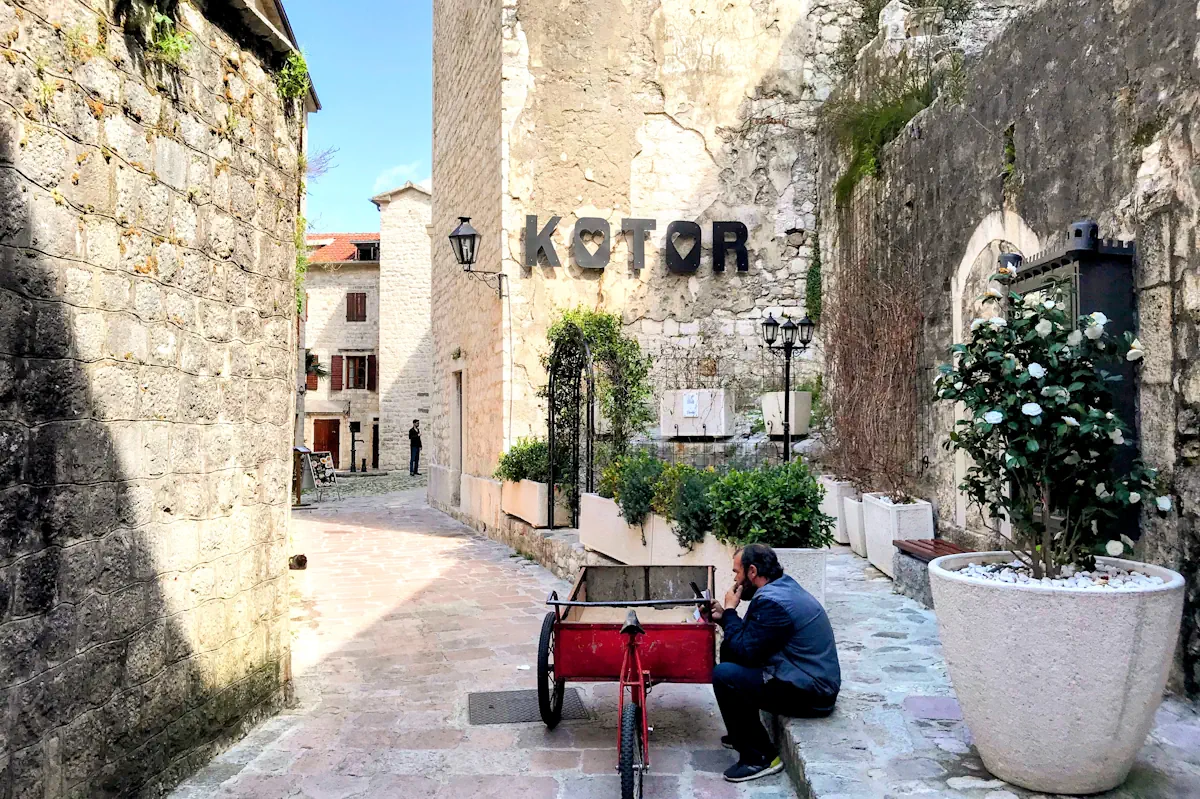
Street names are almost non-existent here. Navigate like a local: follow the church towers and the main squares.
June – September
Peak Season (Lively & Hot)
October – May
Quiet (Some shops closed)
Tip: The Karampana Well remains the best spot to find fresh drinkable water while exploring the core.
“Winner of the World’s Top 5 Jetset Retirement Destinations” — Forbes Magazine
Accommodation
Waking Up in the Middle Ages
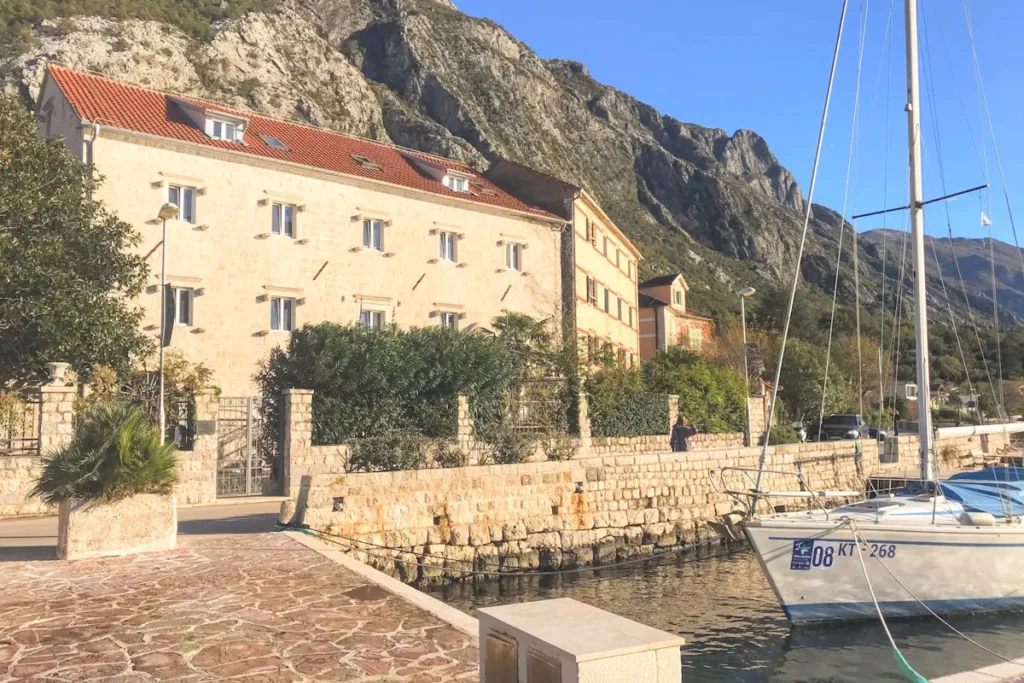
Kotor is famous for intimate boutique hotels tucked inside centuries-old townhouses. Staying within the walls allows you to experience the town after the day-trippers leave, when the lanterns light up the limestone alleys.
- Historic palaces converted into luxury suites
- Rooftop terraces with fortress views
- Walking distance to all major landmarks
Expand Your Horizon
Beyond the Old Town Walls
Kotor is the perfect base for exploring the rest of Boka Bay.
Perast & The Islands
A 15-minute drive to the most romantic village in the Adriatic and its floating church.
Explore Perast →The Serpentine Road
25 hair-pin turns leading to Mount Lovćen for the absolute best view of Montenegro.
Drive the Serpentine →Dobrota Promenade
The “Local’s Kotor” – perfect for sunset walks, swimming, and seaside dining.
Walk the Coast →