
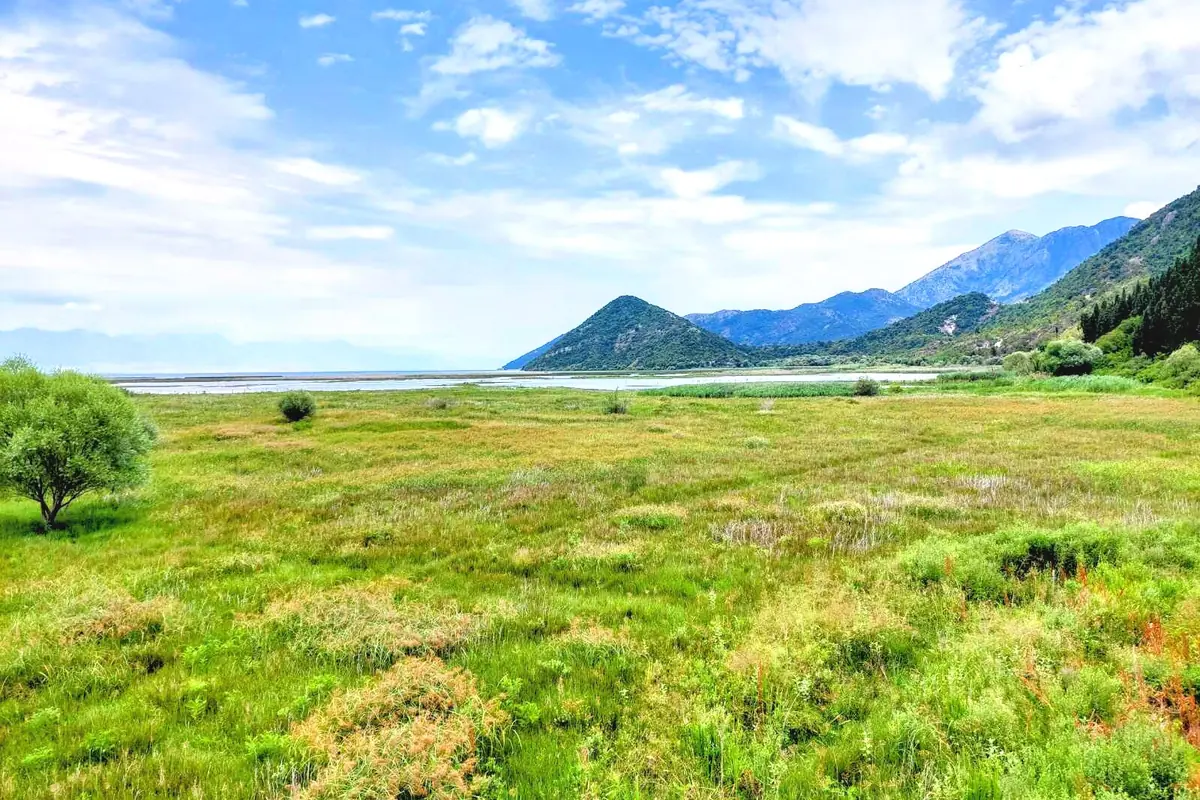
If the Bay of Kotor is Montenegro’s crown, Lake Skadar is its soul. Covering up to 530 square kilometers during the winter rains, it is the largest lake in the Balkans and a strictly protected National Park. Often referred to as the “Amazon of Europe,” this is where the rugged karst mountains of the Dinaric Alps meet a lush, liquid world of floating water lilies, hidden island monasteries, and the heavy scent of wild sage and grapes.
Whether you are here to spot the rare Dalmatian Pelican, sip world-class Vranac wine in a 400-year-old cellar, or kayak through narrow reed channels, Skadar offers a dramatic change of pace from the sizzling energy of the Adriatic coast. It is a place where time slows down, governed more by the flight of the herons than the ticking of a clock.
Entrance Fee
€5.00 Daily / €13.50 Annual Multi-Park Pass
Best Time
May – October (Lilies & Bird Nesting)
Main Gateways
Virpazar (The Hub) & Rijeka Crnojevića (The Escape)
Top Wildlife
Dalmatian Pelican, Glossy Ibis, Pygmy Cormorant
In This Guide
Planning Cheat Sheet
Where to Stay
Hotel De’Andros (Premier village luxury) or Cermeniza Winery (Private stone villas).
Arrival Tip
The train from Podgorica/Bar is just €2–€4. Warning: Use the side path from the station; do not walk along the tracks.
The Iconic View
Pavlova Strana. Head to the terrace of Konoba Ceklin for the country’s most famous panorama.
Essentials
€5.00 cash for the NP entrance fee. Most boat captains and park booths do not accept cards.
Resident Pro-Tip: Ignore the men waving you into private lots in Virpazar. Park in the large gravel lot before the bridge. It’s free and keeps you out of the village gridlock.
Choosing Your Gateway
To explore the lake, you generally have to choose one of two starting points. As a resident, I find tourists often end up in the wrong one because they don’t realize how different these two villages are.
Virpazar
The Strategic HubA bustling, historic fishing village that serves as the “capital” of the lake. Best for those arriving by train or looking for a wide variety of restaurants and activity rentals.
- Easiest access via train or highway
- Most restaurants and rentals
- Gateway to Grmožur (Alcatraz)
- Can feel like a tourist trap in peak summer
Rijeka Crnojevića
The Romantic EscapeA sleepy, postcard-perfect village located at the end of a winding river arm. Ideal for couples or travelers seeking a slower, more intimate connection with the lake.
- Home to the iconic “Danilo’s Bridge”
- Closest to Pavlova Strana viewpoint
- Quieter, more private boat tours
- Road in is very narrow and winding
The “Mandatory” Detour
Panoramic Vistas
Pavlova Strana
Often compared to the Grand Canyon’s Horseshoe Bend, Pavlova Strana is where the river arm of the lake makes a perfect “U” turn around a conical green mountain. It is located on the narrow, old road connecting Podgorica and Cetinje to Rijeka Crnojevića.
The Resident Secret
While the terrace at Konoba Ceklin offers a stunning view, photographers should walk about 50 meters further down the road toward Podgorica. From this specific point, the trees clear and the perspective shifts for a much cleaner shot of the river’s curves.
Driver’s Warning
This road is classic rural Montenegro: single lane, winding, and with steep drops. If you aren’t a confident driver, consider hiring a taxi from Rijeka Crnojevića for the short trip up.
Stegvaš Pass
If you take the southern panoramic route from Virpazar toward Albania, stop at the Stegvaš Pass/Viewpoint. From here, you can see the entire 48-kilometer expanse of the lake, with the jagged, snow-capped Albanian Alps (Prokletije) framing the horizon.
Historical Field Guide
Stone & Spirit
Lake Skadar hasn’t always been a peaceful bird sanctuary. For centuries, it was a volatile frontier. In medieval times, the Balšić and Crnojević dynasties ruled from these shores, until the Ottoman advance forced the seat of power into the mountains of Cetinje.
Žabljak Crnojevića
The Abandoned CapitalThis was the 15th-century capital where Ivan Crnojević ruled before fleeing the Ottomans in 1478. It remains a remarkably well-preserved hill fortress.
Today: Look closely at the base to see remains of an Ottoman-era bridge, a silent witness to 400 years of Turkish rule.
Lesendro Fortress
The Key to the LakeSitting right beside the main highway bridge, this 18th-century stronghold was lost to the Turks in 1843, causing the ruler Njegoš such grief it sparked the saying: “Tuga k’o za Lesendrom”.
Zetska Sveta Gora
“The Holy Mountain of Zeta” – A collection of ancient island spiritual retreats.
Kom Monastery
The “bestseller.” Built in 1415, this is where Njegoš was ordained. Accessible only by boat, it features 150 stone steps leading to 15th-century frescoes and untouched panoramic views.
Vranjina Monastery
Founded in 1221 by Saint Sava. It was destroyed multiple times by Ottoman forces; the current charming church was restored by King Nikola in the 19th century.
Beška & Starčevo
Beška: Home to a community of nuns who produce pomegranate juice.
Starčevo: A 14th-century islet founded by a hermit, still active 700 years later.
Visitor Etiquette
These are active religious communities. Please dress modestly (cover shoulders and knees). Most appreciate a small donation (€5) or a purchase of their local honey or wine.
Active Skadar
The “Amazon of Europe”
From silent paddles to the flight of the Dalmatian Pelican.
Resident Pro-Tip: Ignore the men waving you into private lots in Virpazar. Park in the large gravel lot before the bridge. It’s free and keeps you out of the village gridlock.
1. Boat Tours
The most popular way to see the park. For a private experience, expect to pay €50–€60 per hour (2026 pricing).
- Short Route (2h): Grmožur Island & St. Nicholas Monastery.
- Deep Explorer (4h+): Remote Kom Monastery and the “wild” marshes.
2. Rent a Kayak
Glide through lily meadows where motorboats can’t reach. Glide past the bird sanctuaries of Kamenik and Čakovica.
Resident Pick: Kingfisher Boat & Kayak. Honest and reliable.
3. Bird Watching
A migratory corridor for 280+ species. Head toward Manastirska Tapija or Pančevo Oka.
- Stars: Dalmatian Pelican, Glossy Ibis.
- Best Time: April–June or Sept–Oct.
Refresh & Relax
Can You Swim?
Being a National Park, the water is exceptionally clean and reaches a pleasant temperature in the summer. It is one of the few places in Europe where you can swim in fresh water surrounded by karst mountains.
Murići Beach
The lake’s largest beach on the southern shore. Known for its light pebbles and proximity to island monasteries.
Pješačac Beach
A “hidden gem” accessible only by boat. Quiet panorama of Grmožur Island and a rustic restaurant experience.
The Crmnica Taste
Wines of the Earth & Bounty of the Lake
Vranac Wine
Sip dark reds in 400-year-old cellars. One of Europe’s most powerful reds.
Smoked Carp (Krap)
Rich, savory carp prepared with onions and dried plums. Essential local staple.
Endemic Bleak (Ukljeva)
Small, fried, and salty. Famous at the Festival of Wine and Bleak in Virpazar.
Signature Tables
Boat Restaurant Silistria
Atmospheric ship docked in Virpazar. Traditional fish soup and smoked carp right on the water.
Besac Heritage Retreat
Located within restored Besac Fortress. Definitive spot for sunset views and high-end wines.
Fishing Rules (2026)
1 Day License: €5.00
1 Week License: €20.00
Licenses in Virpazar. Strictly Prohibited: March to June.
Skadar Accommodation
Where to Stay
Because Virpazar is compact, your choice of stay defines your experience: you can either be in the heart of the village bustle or tucked away in the surrounding vineyards. For the most authentic experience, look toward the hills of Crmnica, where stone-built estates offer silence and local wine just minutes from the lake.
Refined Village Luxury
Check Availability →
Hotel De’Andros
The most sophisticated choice within the village itself. It offers a rare rooftop pool with views of the river and the fortress, combining modern 4-star amenities with immediate access to the pier.
Traditional Stone Villas
View Resort →
Cermeniza Resort
A beautifully restored stone complex that captures the spirit of the region. Offering a balance of rustic charm and private wine tastings, it’s the ideal base for exploring the Crmnica wine roads.
Boutique Vineyard Stay
View Estate →
Estate San Duyevo
A high-end Mediterranean estate nestled in the heart of the countryside. Wake up to garden views and world-class wine in a setting that defines rustic elegance and boutique hospitality.
Secluded Sanctuary
View Retreat →
Cottage Retreat
An independent haven providing a private sanctuary surrounded by the dramatic backdrops of the lake mountains. Perfect for those seeking a quiet, self-catering base away from the crowds.
Sustainable Luxury
View Glamping →
Hoopoe Glamping
An eco-conscious retreat featuring safari-style tents. Located just outside the village, it offers panoramic views and a profound sense of peace for the nature-focused traveler.
The Logistics
Getting There & Around
The average depth of Lake Skadar is only 4–6 meters, making it a very “navigable” lake, but you need to know how to reach the shore first.
The Scenic Route
Check Timetables →
By Train
9+ daily departures from Podgorica/Bar. Takes ~31 mins. The most scenic and cheapest way (€2–€4) to arrive.
Resident Tip: The station is 1km away. Use the side path to walk into town; do not walk on the active tracks.
The Flexible Choice
Free Parking Pin →
By Car
30 mins from Podgorica; 1.5–2 hours from Kotor/Tivat. Essential for visiting remote viewpoints like Pavlova Strana.
Resident Tip: Avoid the village center gridlock. Use the large gravel lot before the bridge—it’s free and far less stressful.
The Local Transit
Book Bus Tickets →
By Bus
Direct lines from Podgorica/Bar. From Budva, change at Petrovac. Drivers usually drop you at the entrance lot.
Resident Tip: Book via Busticket4.me in advance during summer to guarantee a seat on the popular coastal routes.
Skadar Lake Guide ×
