
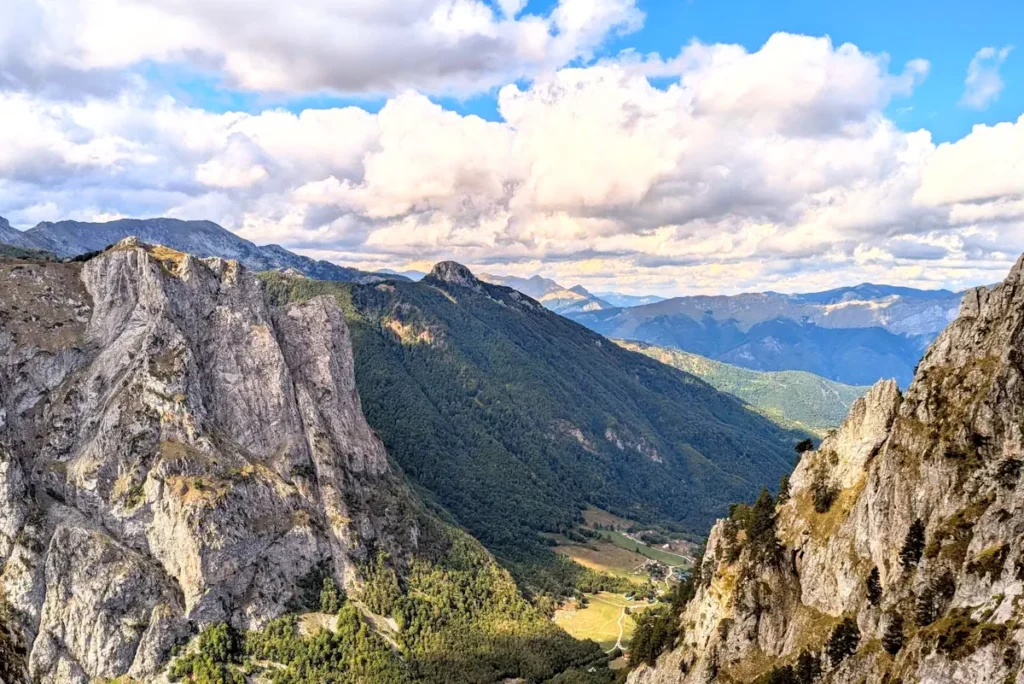
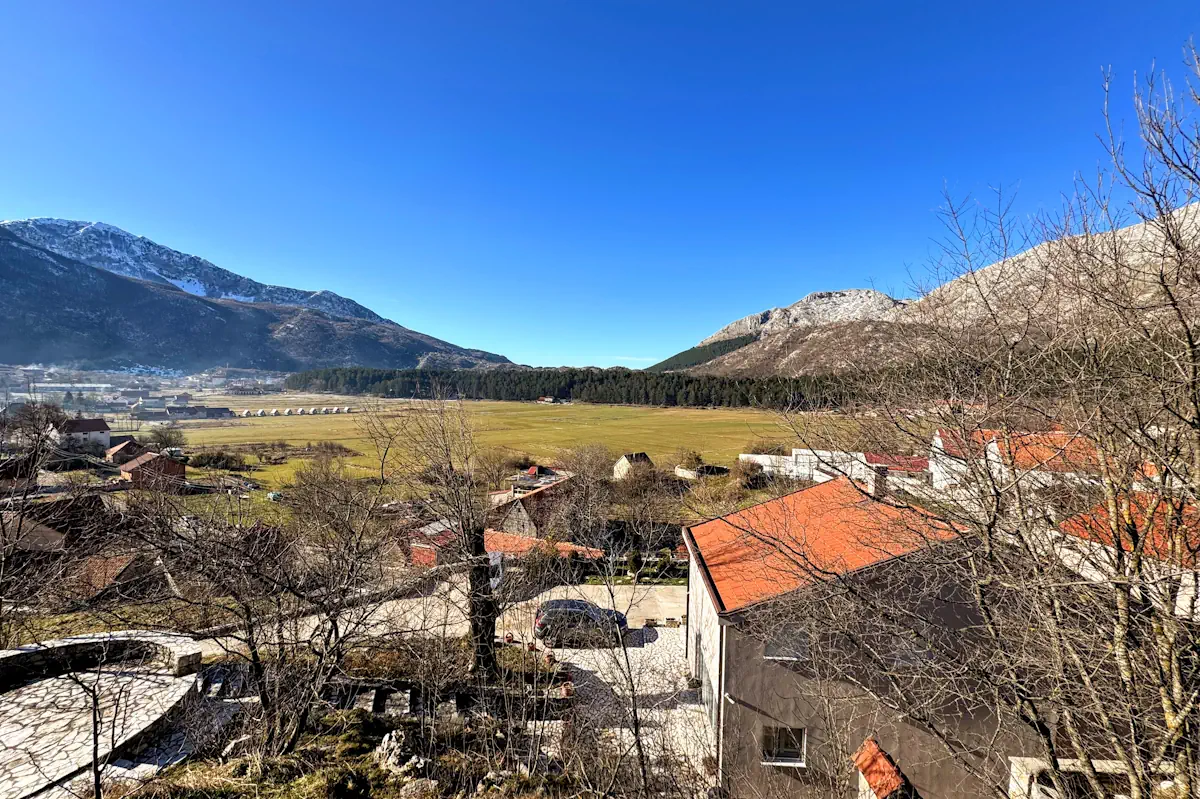
While the Bay of Kotor is defined by its Venetian shimmer and salt air, Njeguši is defined by limestone crags and the scent of beechwood smoke. Wedged between the coastal fjords and the former Royal Capital of Cetinje, this high-altitude plain at the foot of Mount Lovćen is the ancestral seat of the Petrović-Njegoš dynasty and the spiritual home of Montenegro’s most famous culinary exports.
As you snake up the legendary 25 switchbacks from the coast, the air cools and the Mediterranean glitz gives way to a “village of transit” that doubles as a living ethnographic monument. Home to a close-knit community of artisans and farmers who have weathered these dramatic rock faces for generations, Njeguši offers a masterclass in mountain survival. It is a landscape defined by sturdy stone architecture and the ubiquitous sušara (smoke-houses) that preserve the nation’s most prized flavors.
Njeguši at a Glance
Best For
Foodies, history buffs, and road-trippers
The Vibe
Authentic, Alpine, and Rustic
Altitude
~900m (Expect 5-10°C temperature drop)
Must-Try
Pršut, Njeguški Sir & Steak
Top Landmark
The Birthhouse of Petar II Petrović-Njegoš
Key Activity
The 25-Serpentine Drive and Zip Line
The Ascent
The 25 Serpentines: A Road to the Clouds
Getting to Njeguši is an experience in itself. The most famous route involves the legendary Kotor Serpentines, a series of 25 sharp hairpins that climb from sea level to over 1,000 meters in less than 20 kilometers. Built by the Austro-Hungarians in the late 19th century, this road was once the only lifeline between the Adriatic coastal world and the mountain stronghold of the Montenegrin Kings.
The Famous “M”
As you climb, look closely at the road’s layout. Legend has it that the engineer, Josip Slade, designed a specific section of the switchbacks to form the letter “M” as a tribute to Queen Milena of Montenegro. Whether intentional or a feat of geographical necessity, the shape remains one of the most photographed road features in Europe.
The View from Hairpin 25
The reward for navigating the narrow corners is the view. By the time you reach the final hairpin, the entire Boka Bay is laid out below you like a blue velvet ribbon. On a clear day, you can see past the Luštica Peninsula all the way to the open Adriatic.
Resident Warning: The Bus Deadlock
During July and August, this road can be stressful. Huge tour buses frequent the route, and passing them on a 180-degree turn requires patience and reversing skills. If you are driving a rental car, aim to be on the road before 9:00 AM. This ensures you are ahead of the bus traffic and allows you to enjoy the “Horizont” viewpoint at the top without the crowds.
The Flavors of Njeguši
Curing & The Science of the “Bora”
The name “Njeguški” is more than a label; it is a protected designation of origin. You cannot legally claim to produce this ham unless it has been cured in the thin, mineral-rich air of this specific plateau. The secret lies in a perfect geological accident: the collision of dry, cold Bora winds from the north and the salt-laden, humid air of the Adriatic. This constant atmospheric exchange creates a natural laboratory for a fermentation process that prevents spoilage while maintaining moisture.
The Sušara Tradition
The signature aroma of Njeguši comes from the stone smoke-houses. Hams are hung and smoked over slow-burning beechwood fires for 30 to 40 days. This rugged mountain process creates a deep mahogany color and a flavor profile that is world-renowned for its savory intensity.
A Different Cut
While the rest of the Mediterranean prizes paper-thin slices, Montenegrins pride themselves on thick-sliced, salty ham. It is a nod to the village’s “Spartan” history, where the pršut was the primary fuel for highlanders and warriors.
Njeguški Pršut: The 12-Month Ritual
The process is uniquely rugged compared to Italian or Spanish counterparts:
1. The Salting & Pressing
Hind legs are rubbed with coarse sea salt for several weeks. Crucially, they are then placed under large stone slabs to manually squeeze out excess moisture, resulting in the flat, dense texture characteristic of the region.
2. The Secret Rub
Before smoking, the meat is dusted with chili powder. It isn’t for spice, but acts as a natural preservative and adds a very subtle warmth to the finish.
3. The Maturation
After smoking, the hams hang in dark, cool cellars for up to a full year. This is when the flavor moves beyond simple smoke into a complex, mahogany maturity.
4. Local Context
In Montenegro, the best pršut is found in private cellars rather than supermarkets. Always look for a deep red color and a thick white layer of healthy fat.
The Golden Standard: Njeguški Sir
If the prosciutto is the king, Njeguški Sir is the queen. This full-fat, hard sheep milk cheese was recently ranked by Taste Atlas as one of the best in the world. The livestock graze on the wild herbs and salty grasses of the Lovćen slopes, which infuses the milk with an aroma of sage and mountain thyme.
The cheese is aged in wooden vats or wrapped in oil-soaked cloths, resulting in a golden-yellow crust and a crumbly, tangy interior. It is most often served with crusty bread, olives, and a glass of robust Vranac wine.
Resident Tip:
Ask for “stari sir” (old cheese) if you want an intense, biting flavor, or “mladi sir” (young cheese) if you prefer a milder, creamier taste.
The Modern Masterpiece
The Njeguški Steak: A Gold-Medal Legacy
While the prosciutto and cheese have been staples for centuries, the Njeguški Steak is a more modern masterpiece. It represents the pinnacle of Montenegrin culinary logic: taking the best ingredients from the mountain and serving them with the finesse of a high-end kitchen. As any local chef will tell you, when your components are this good, doing too much to them is unwarranted; and even ill-mannered.
The Invention of a Classic
The steak was famously crafted by Milovan Stojanović, the personal chef to Yugoslav leader Josip Broz Tito. Though named after Montenegro’s 19th-century ruler, it was actually a 20th-century creation. Stojanović’s “folded schnitzel” was so impressive it won a gold medal at a world cooking championship in 1986, cementing its place in Balkan gastronomic history.
Anatomy of the Original Recipe
The Foundation
200g of boneless veal loin, pounded thin and seasoned with sea salt.
The Core
60g of thinly sliced Njeguši Prosciutto and 60g of Njeguši Cheese with a hint of chopped thyme.
The Fold
The meat is folded to seal the filling, allowing the ham and cheese to meld on the grill.
The Garnish
A ball of kajmak (clotted cream) rolled in thyme, served with steamed broccoli and potatoes.
The Modern Reality
In the rush of the summer season, you will rarely find the steak in its original “Gold Medal” form. Traditional potatoes are often substituted for frozen fries. If you want the authentic experience, look for smaller, family-run konobas that still steam their vegetables and respect the original plating.
Resident Tip: Appetite Control
This is a heavy “winter” dish designed for mountain appetites. If you are ordering it for lunch in the middle of a July heatwave, we recommend skipping the appetizer; a proper Njeguški steak is usually enough to feed two people!
The Cradle of Kings
Historical Weight: The Petrović-Njegoš Legacy
The village architecture is a masterclass in mountain survival, defined by sturdy stone houses and the “open city” layout. Because the highlanders were so confident in their mountain defenses, Njeguši never needed massive city walls. The mountains were the fortress, and the bravery of the “Captains of Njeguši” was the gate.
The Birthplace of a Giant
Njeguši’s most significant claim to fame is its role as the cradle of the Petrović-Njegoš dynasty. This is the birthplace of Petar II, Montenegro’s greatest ruler and poet. You can visit his birth house, a modest but powerful stone structure built by his uncle, Petar I, in 1779.
Now an ethnographic museum, the house offers a window into the 18th-century “Spartan” lifestyle of the Montenegrin nobility. Inside, you will find:
- Traditional Attire: Folk clothing with intricate embroidery.
- Old Weaponry: Firearms used in historical mountain skirmishes.
- Royal Artifacts: Personal belongings of the dynasty.
A Ruler of Contrasts
The Bishop-Warrior
A high priest of the Orthodox Church who nonetheless carried a sword and led his people in defense of their territory.
The Modernizer
He founded the first primary schools, established a senate, and even introduced taxation to a people who famously hated being told what to do.
The Poet
His magnum opus, The Mountain Wreath, is to Montenegrins what Shakespeare is to the English. It is a profound meditation on freedom.
“Njegoš is the mountain, and the mountain is Njegoš.”
Local Saying in the Highlands
Planning & Adventure
Logistics & National Park Access
Navigating the transition from the village to the mountain peak requires a bit of planning, especially regarding entry fees and timing. Whether you are hunting for history or chasing an adrenaline rush, these “resident hacks” will save you both time and money.
The Combined Ticket
The Njegoš Birth House in the village operates on a combined ticketing system. Typically costing €8.00, this ticket also includes entry to the Njegoš Mausoleum at the top of Mount Lovćen.
Top Tip: Keep your physical stub!
The “Cetinje Hack”
If you are staying in the former Royal Capital, buy the Combined Museum Pass in Cetinje (€20.00). It covers several major sites and often allows you to enter the Mausoleum and the Birth House in Njeguši for free. It is the most efficient way to see the “Full Royal Circle.”
National Park Entry
As you leave the village and head toward the summit or Ivanova Korita, you will encounter a ranger booth. For a deeper dive into the summit’s trails and the monument itself, see our Full Lovćen National Park Guide.
Standard Fee: €3.00 per person. | The Multi-Park Hack: If visiting Durmitor, Lake Skadar, or Prokletije, ask for the Annual National Parks Pass (€13.50). It pays for itself by your third park entry.
Adventure: Beyond the Tasting Room
The Njeguši Zip Line
Located near the top of the Kotor Serpentine, this line suspends you over a massive gorge. It offers a “bird’s-eye” view of Boka Bay that is impossible to capture from the road.
Hiking the Wolf Trail
A local favorite for burning off steak calories. This moderately challenging hike winds through ancient beech forests to viewpoints overlooking the entire Cetinje valley.
The Old Caravan Trail
Follow the original mule track that served as the only lifeline between Kotor and the mountains for centuries before the Austro-Hungarian road was built.
When to Visit
The Sweet Spot (May – Sept)
The road is clear, the tasting rooms are open, and the air is a refreshing 5-10°C cooler than the coast. Aim for a weekday morning to avoid the cruise ship excursion buses.
The Winter Lockdown
From November to March, the Serpentines can be treacherous with ice. Many tasting rooms close, but this is when the smoking process is at its peak. If you visit now, you’ll smell the beechwood before you see the village.
