
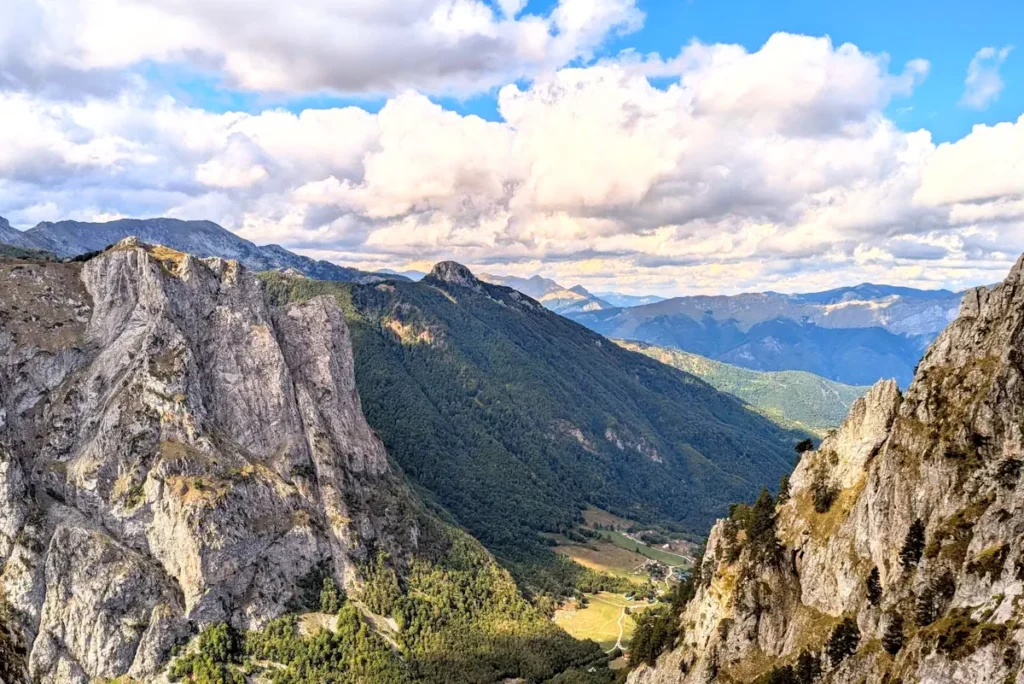
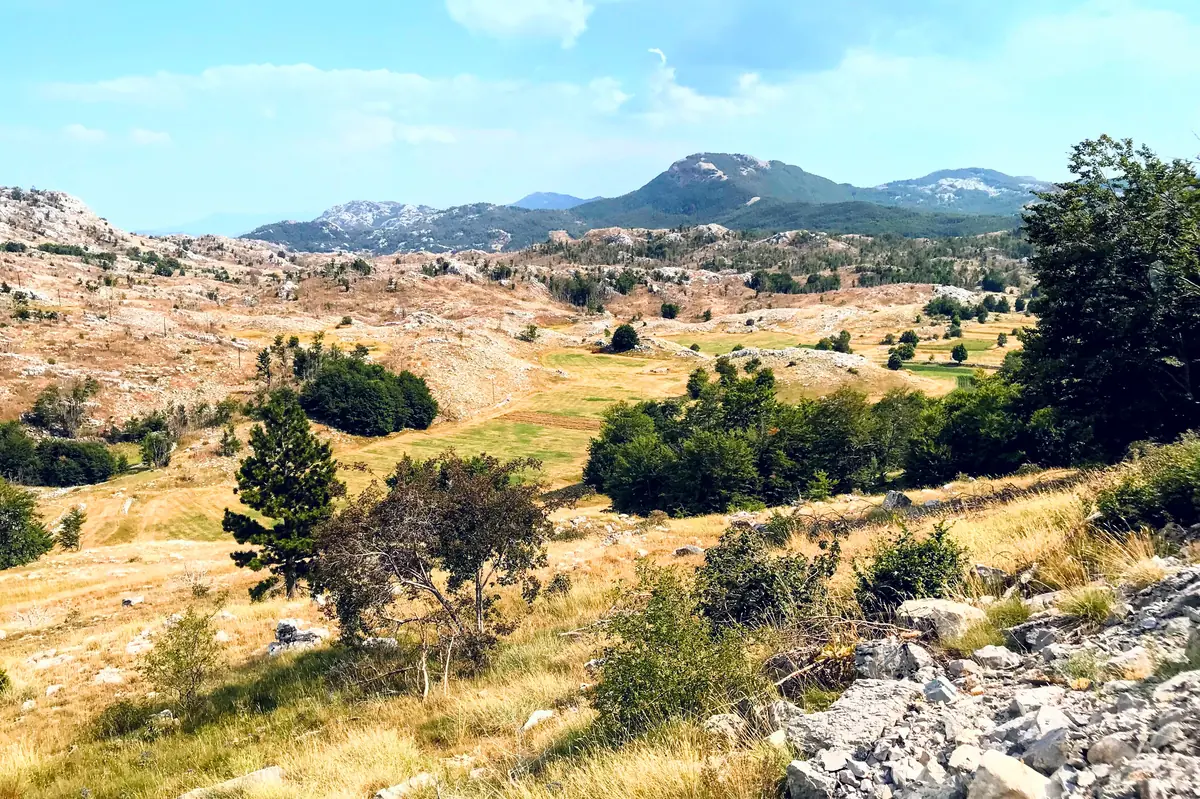
While neighboring Njeguši is defined by its deep-rooted culinary heritage, Lovćen National Park is defined by its staggering verticality. This “magical” peak has shaped Montenegro’s national identity for centuries; its topography at sunset, when the limestone crags cast deep, dark shadows, earned it the nickname the “Black Mountain.” This narrative eventually became the namesake for the entire country: Crna Gora, or Montenegro.
Rising 1,749 meters directly above the turquoise waters of the Adriatic, this isn’t just a park – it’s a limestone altar where Mediterranean air meets the cool mountain breeze. Whether you arrive via the 25 hair-raising turns of the Kotor Serpentine or the sleek 11-minute cable car, you are about to stand where the kings of Montenegro are buried, looking out over nearly 80% of the country’s rugged territory.
Best For
History buffs, hikers, and photographers seeking the ultimate 360° panorama of the Adriatic.
The Vibe
Epic and spiritual; a “limestone altar” where mountain clouds meet Mediterranean sunlight.
Transport
A 1-hour drive from Kotor/Budva, or the new Kotor-Lovćen Cable Car (11-minute ascent).
Must-Try
Mountain Fuel: Freshly fried Priganice served with salty Njeguši cheese and local honey for a true highland breakfast.
Resident Tip: Expect a 10°C drop from sea level. Even in August, the mountain wind requires a light jacket.
Quick Guide
Lovćen Planning Cheat Sheet
Where to Stay
Hotel Ivanov Konak is the classic choice for hikers. For those wanting a pool and modern amenities, Hotel Monte Rosa is the primary option in the park.
View Best Rates →Arrival Logistics
If taking the cable car, you will arrive at the Kuk station. You must book a taxi or shuttle in advance to reach the Mausoleum, as it is several kilometers away.
Search Car Rentals →The “Cetinje Hack”
Purchase the €20 Combined Museum Pass in Cetinje. It covers the King Nicholas Museum and often includes the Mausoleum entry fee (€8).
Official Park Fees →Golden Hour Timing
The Mausoleum gates typically close at 6:00 PM. Arrive by 5:00 PM to ensure you have enough time to climb the tunnel and see the sunset light hit the Lovćen peaks.
“Even if the coastal cities are scorching at 35°C, the wind at the Jezerski Vrh summit can be fierce. A light windbreaker is essential for the walk from the parking lot to the tomb.”
— Summit Safety Tip
The Journey Up
Kotor-Lovćen: Two Ways to the Sky
For over a century, the only way to reach the “Throne of Montenegro” was a grueling climb. Today, visitors face a choice between one of Europe’s most famous historic drives and a state-of-the-art aerial shortcut that has redefined access to the massif.
Modern Access
The Kotor Cable Car
The fastest route to the high altitudes. Departing from the Dub station near Kotor, this 11-minute ride bypasses the traffic and launches you directly onto the Kuk plateau.
- Speed: 11 minutes of vertical ascent.
- The View: Uninterrupted aerial panoramas of the Tivat and Kotor bays.
- Logistics: Book Official Tickets Online →
Historic Drive
The Kotor Serpentine
The “Old School” adventure. This Austro-Hungarian engineering marvel features 25 hairpin turns, each revealing a more dramatic angle of the fjord below.
- Duration: 45–60 minutes from Kotor Old Town.
- Pro-Tip: Rent an automatic for a smoother climb. Check Local Car Rates →
- Note: Essential for those who want to visit the village of Njeguši on the way.
Important 2026 Travel Note
While an extension of the cable car deeper into the park is currently under construction, the journey presently ends at the Kuk station. For now, it is not possible to easily reach the Njegoš Mausoleum from the cable car station without a pre-arranged shuttle or taxi. If your primary goal is the summit, the Serpentine road remains the most direct route to the park’s heart.
The “Ladder of Kotor”: The Hiking Alternative
The payoff: Looking back at the “Ladder” switchbacks and the shimmering Boka Bay.
Running almost parallel to the paved road is the Ladder of Kotor, the original caravan trail used for centuries before the Austro-Hungarians arrived. While the road has 25 wide turns, this rocky hiking path features over 70 tight switchbacks, offering a raw, quiet perspective of the mountain.
The Route
The trail is a 6.5 km ascent that eventually meets the P1 road near the Nevjesta Jadrana restaurant, bridging the gap between the fjord and the massif.
The Reward
As you climb higher, the fortress walls of Kotor begin to look like tiny ribbons of stone against the massive turquoise backdrop of the Adriatic.
The Village En Route
Njeguši: The Cradle of the Highlands
As the road levels out into a sheltered plain at the foot of the peak, you’ll reach Njeguši. This is the birthplace of the Petrović-Njegoš dynasty and the undisputed culinary capital of the mountains. Even if you are just passing through, the scent of beechwood-smoked Pršut in the air is inescapable.
The Crown of Montenegro
Jezerski Vrh: The Cloud Seat
From the Njeguši plateau, a 15-minute drive leads to Jezerski Vrh (1,657m). As George Bernard Shaw famously remarked, the view from this summit reveals a “sea of mountains.” It is the most iconic viewpoint in the Balkans – a place where the earth feels small and the history of Montenegro feels gargantuan.
The Ascent: 461 Steps
To reach the tomb, you must pass through a cool, marble-lined tunnel and climb 461 stone steps. The tunnel acts as a sensory transition, shielding you from the mountain winds until you emerge into the light at the very crest of the peak.
€8.00
Adult Entry Fee
The Guardians
Designed by the legendary sculptor Ivan Meštrović and completed in 1974, the entrance is flanked by two beautiful granite caryatids. These massive figures of Montenegrin women in traditional dress guard the passage to the sanctuary.
The Gold Canopy
Inside, a 28-ton statue of Njegoš sits beneath a breathtaking vault. The ceiling is lined with over 200,000 gold-plated tiles imported from Italy, creating a shimmering, celestial atmosphere that feels more spiritual than secular.
The Guvno: A 360-Degree Panorama
Behind the mausoleum, a narrow path leads to a circular stone platform known as a Guvno (or Gumno). Traditionally, these threshing floors were village status symbols and meeting places. Here, it serves as the ultimate “throne,” offering views of 80% of Montenegro – from Lake Skadar to the jagged Durmitor peaks.
Basecamp & Biodiversity
Ivanova Korita: The Valley Oasis
Situated at 1,250 meters, Ivanova Korita is a lush green plateau halfway between the royal capital of Cetinje and the mountain summit. Named after Ivan Crnojević – the 15th-century ruler who founded the Montenegrin state – this valley serves as the park’s primary hub for recreation, family picnics, and mountain air “therapy.”
Outdoor Adventure & Hiking
The terrain here is a playground for outdoor enthusiasts. Whether you are looking for a gentle forest stroll or a high-cardio ascent, Ivanova Korita is the trailhead for Lovćen’s best-marked paths.
The Wolf Trail (Vučja staza)
The park’s most popular hike. Starting at Hotel Ivanov Konak, this 3-hour loop winds through ancient beech forests to the Babina Glava peak, revealing panoramic views of the Budva and Tivat Rivieras.
The Adventure Park
A rope park near the visitor center featuring trails for all ages. Perfect for occupying the kids while you prep the barbecue.
| Ages 4–8 (White/Orange) | €8.00 |
| Ages 9–13 (Green/Blue) | €12.00 |
| Ages 14+ (Black) | €18.00 |
Flora, Fauna & Fragrance
Lovćen is a sanctuary of biodiversity, home to the endemic Lovćen Bellflower and wild medicinal herbs like Wormwood and St. John’s Wort. Keep your eyes peeled for wildlife; the dense forests are inhabited by wild boars, foxes, and occasionally, the elusive wolves and bears that give the “Black Mountain” its wild reputation.
Resident Tip: Mountain weather is unpredictable. Start your hikes early to avoid the afternoon sun, and always rent a detailed map or hire a guide at the Visitor Center if you plan to venture off the main loop.
Go Beyond the Trails
To see the truly wild side of Lovćen – including Austro-Hungarian ruins and hidden peaks inaccessible by car – we recommend the full-day Jeep Safari departing from Podgorica or Cetinje.
Overnight in the Clouds
Lovćen: The Forest Retreats
While most visitors treat Lovćen as a quick stop on the way to the Mausoleum, the mountain reveals its true magic after the day-trippers have descended. Staying at Ivanova Korita allows you to wake up to the scent of pine and the absolute silence of the massif.
Hotel Ivanov Konak (4★)
From €65 / NightThe most established name in the park. As a publicly owned hotel, the service and room maintenance can sometimes feel lacking compared to private boutiques, but its on-site restaurant remains a fine choice for traditional mountain fare.
- The Vibe: A rustic, unpretentious “mountain cabin” atmosphere that is best enjoyed for a meal.
- Location: Directly at the trailhead of the Wolf Trail.
Kraljičin Vrt (Queen’s Garden) Cafe
Located directly opposite Ivanov Konak, this cafe offers arguably the most tranquil shaded terrace in Montenegro. It is the perfect spot for a post-hike pizza while listening to nothing but the mountain breeze.
Hotel Monte Rosa (4★)
From €47 / NightFeatures a swimming pool and sauna. Some fixtures are a bit dated, but the view of the Mausoleum from the upper rooms is spectacular.
Check AvailabilityBreeze Home Cottage
A cozy, independent cottage perfect for couples seeking total seclusion.
Book on Booking.comLovćen Holiday Home
Large, stone-walled traditional house ideal for families and group BBQ nights.
Book on Booking.comLovćen Escape
Modern amenities meet mountain architecture. Excellent for long-term “digital nomad” stays.
Book on Booking.com
The Soul of the Mountain
The Giant in the Clouds
To understand why this mountain is sacred, you must understand the man whose name is on every signpost. Petar II Petrović-Njegoš was a giant in every sense: standing nearly two meters tall, he was a prince-bishop (vladika), a statesman, and the greatest poet in South Slavic history.
The Poet-Prince
Born in 1813 in the village of Njeguši, his voice was shaped by the Gusle and epic tales of resistance. His masterpiece, “The Mountain Wreath” (1847), is the Montenegrin National Epic – a window into the folk wisdom and the centuries-long struggle for freedom.
The Statesman
Ruling from 1830 to 1851, he modernized a land of warring tribes. He built schools, introduced taxes, and established the first state institutions, all while navigating the delicate politics of the Russian, Austrian, and Ottoman empires.
A Final Request
Njegoš died of tuberculosis at just 37. His final wish was to be buried in a simple chapel he built on Jezerski Vrh, so he could “watch over his people” from the highest point. Though that chapel was destroyed by war, the current 1970s Mausoleum serves as a monumental fulfillment of that desire: keeping the “Giant of Lovćen” forever perched between the earth and the heavens.
Planning Your Visit
Fees & Resident Hacks
Entrance Fees
- National Park Entry: €3.00 per person
- Njegoš Mausoleum: €8.00 (Adults) / €4.00 (Children)
- Annual Park Pass: €13.50 (Covers all 5 National Parks)
The “Cetinje Hack”
If you are staying in the former Royal Capital, purchase the Combined Museum Pass (€20.00). This ticket often includes entry to the Mausoleum and the King Nicholas Museum in Cetinje, saving you roughly 30% on total entry fees.
Final Verdict: Is it Worth It?
Absolutely. Even if you don’t share the deep spiritual connection that locals have with the “Black Mountain,” it is impossible not to be moved by this landscape. Lovćen is the place where Montenegro’s history, culture, and nature collide, a transition from the Venetian coast to the rugged heart of the Balkans.
Accessibility
Go from the coastal heat of Kotor to the crisp air of the beech forests in under an hour.
More than a Grave
From the adrenaline of the Adventure Park and ATV rentals to the quiet solitude of the Wolf Trail.
The Social Proof
Njegoš chose this peak as his eternal rest. If it was good enough for the man who shaped the nation, it is worth your time.
Final Resident Tip: Don’t just rush back to the coast. Stop at the small mountain restaurant next to the Mausoleum for an “energizing snack.” The prices are slightly higher, but you are paying for a view that literally covers the entire country.
Explore Lovćen ×
