
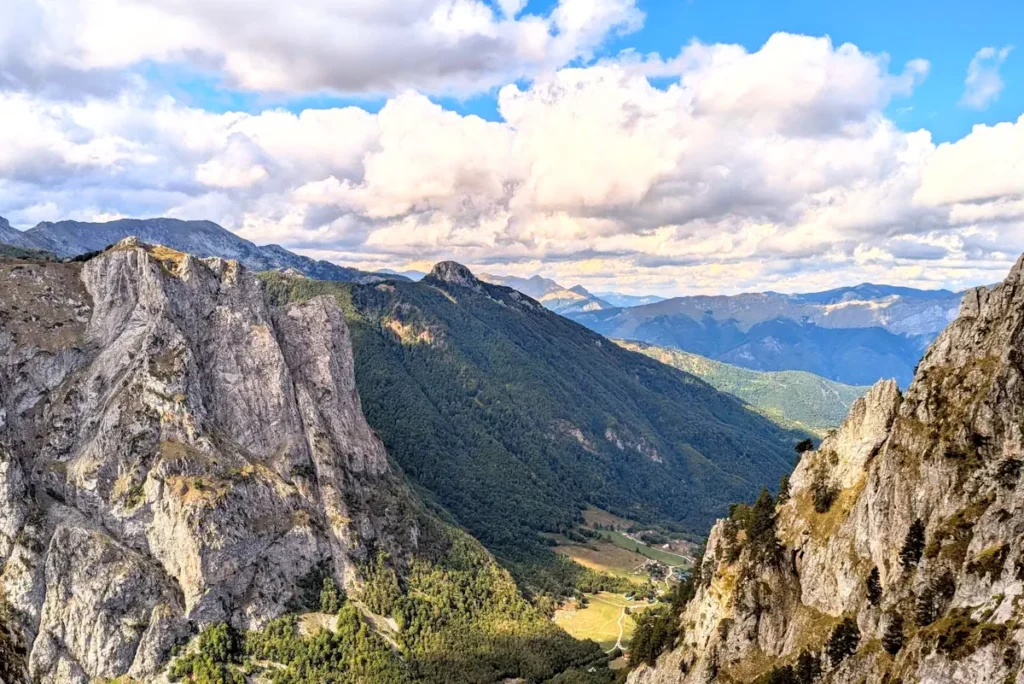
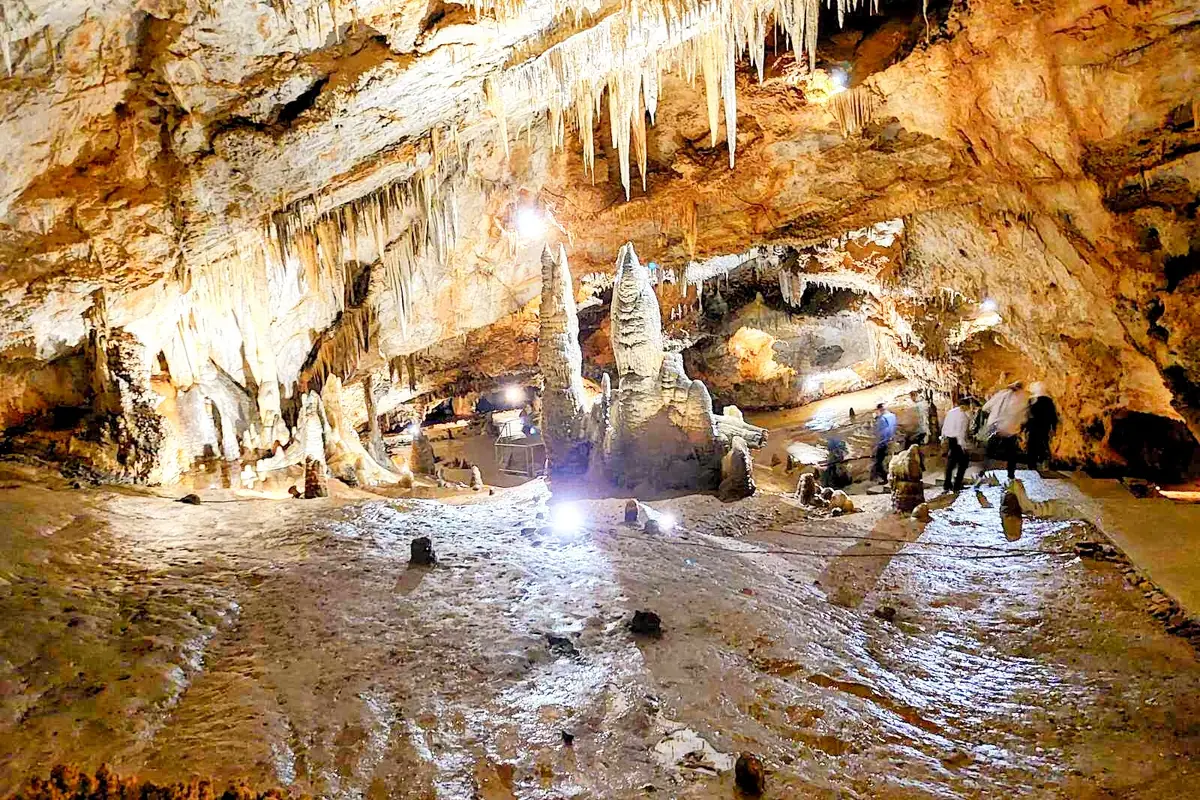
Located just minutes from the historic capital of Cetinje, Lipa Cave (Lipska pećina) is one of the largest and most significant cave systems in the Balkans. With 2.5 kilometers of winding passages and towering halls, it offers a dramatic descent into the prehistoric heart of Montenegro.
01
The Cave Expedition
The journey begins at the parking terminal, where a small tourist train transports visitors across the rugged landscape to the cave’s entrance. From there, professional guides lead you into a world of stalactites, stalagmites, and stone curtains that have been forming for millions of years. The temperature inside remains a constant 10°C (50°F) year-round, regardless of the heat above.
02
The Cave Tour
The experience is centered around a 60-minute guided expedition through well-lit galleries and winding stone corridors. Led by professional English-speaking guides, the tour culminates in Njegoš’s Hall, a massive subterranean cathedral of stone. Unlike wilder caves in the region, Lipa is exceptionally well-equipped with modern pathways, making it accessible for a wide range of travelers.
03
Karst Architecture
Shaped by the ancient waters of the Cetina River, Lipa Cave began its formation during the Pliocene epoch (5.3 to 2.6 million years ago), long before humans walked the earth. As tectonic changes shifted the river’s path, the underground flow emerged through new channels, leaving behind the stunning dry galleries we see today.
This process continues silently; the calcium-rich drip adds just 1 cm to the formations every 100 years. This means the pillars in the main hall were architectural masterpieces of nature long before the first stones of Cetinje were laid.
Plan Your Visit
Expert Tips
- Dress Warm: A jacket is mandatory. Even in August, the internal temperature is a constant 10°C.
- Tickets: During peak season (July/August), booking 24 hours in advance is highly recommended.
- English Tours: Professional guides lead the expeditions in English, providing historical context.
- Footwear: Wear sneakers or hiking boots. Modern paths are safe but can be damp or slippery.
Logistics & Amenities
Arrival Park at the main ticket office lot (free). From here, a dedicated shuttle bus/train transports you to the cave mouth. While the website has a set schedule, tours often run more frequently based on demand.
Lipa Cave Bar There is a charming café onsite near the ticket terminal. It’s the perfect place to enjoy a coffee with a view of the karst hills before your tour.
Accessibility The cave is family-friendly, but strollers are not permitted. The terrain includes steps and slopes, making it unsuitable for people with disabilities.
The Rijeka Crnojevića Trek
For the seasoned trekker, a challenging ascent connects Rijeka Crnojevića to the plateau of Lipa Cave. This historic route winds through the ancient stone villages of Gornji Ceklin and Dobrsko Selo, the heart of the region’s traditional winegrowing culture. It is a demanding climb through a landscape of hidden vineyards and limestone crags, where the scent of wild sage and old Vranac cellars replaces the lake’s humid breeze.
Distance: ~11 km (one way)
Elevation: +700m Gain
Time: ~6 Hours
Difficulty: Moderate – Difficult
