
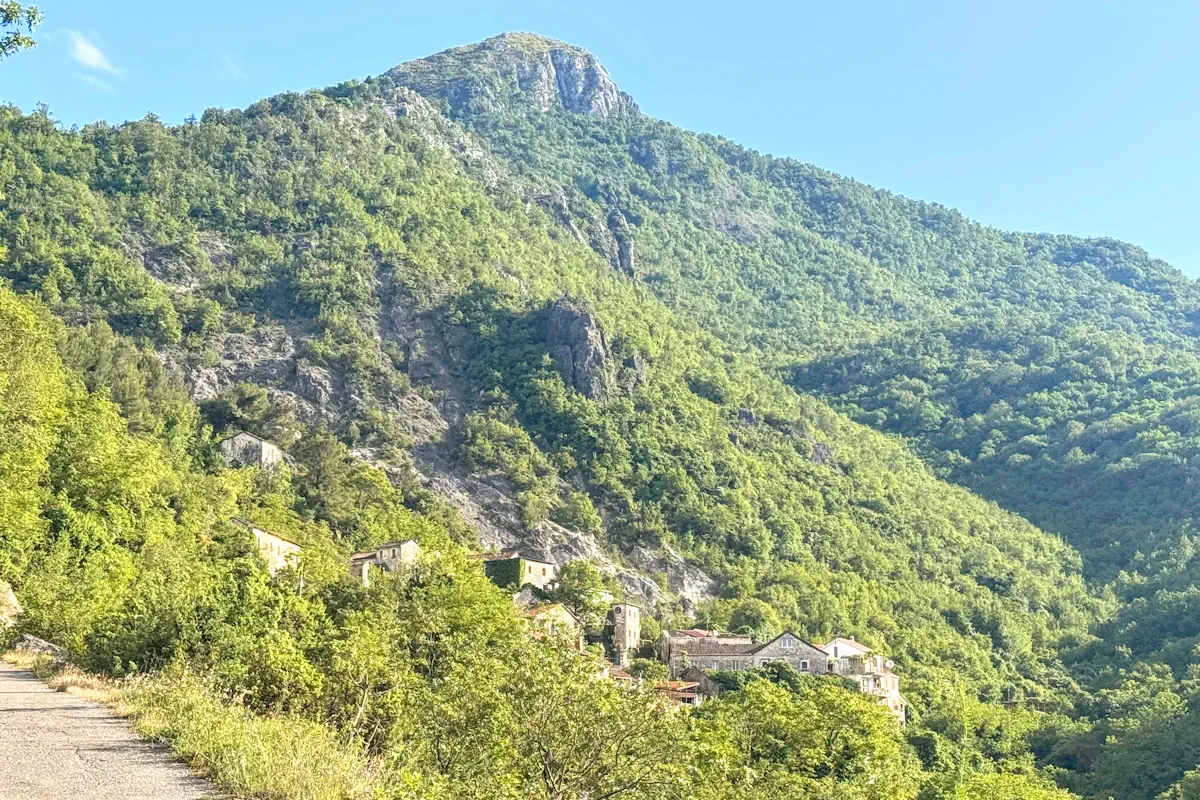
It seems as though time has stopped in Godinje.
Clinging to the emerald slopes above the water, this almost-abandoned village is perhaps the most atmospheric corner of the Skadar Lake region. Here, the modern world feels like a distant memory, replaced by a labyrinth of medieval stone houses, arched doorways, and a silence broken only by the rustle of grapevine leaves.
But Godinje is far from empty; its pulse survives in the passion of its people. We recently had the privilege of sitting down with a local producer whose life is a testament to the land. Producing wine and liqueurs on a small, artisanal scale, he shared with us the fruits of his vineyard – most notably his outstanding Garnet wine (a premium Vranac).
“It was a story of passion and care for all stages of production; a love for the land and a wish to live in harmony with the environment.”
Accompanied by a delicious set of local products, many of which he prepared himself, the tasting was more than just a meal; it was a journey into heritage. To visit Godinje is to step into a story of resilience and the deep, ruby-red soul of Montenegrin wine culture.
Experience the magic of the Garnet cellar for yourself.
View Tasting Details & Availabilty →* Note: This post contains affiliate links; we may receive a small commission on bookings at no cost to you.
The Labyrinth of Stone
The defining feature of Godinje is its ingenious “connected” architecture. Built as a defensive stronghold against Ottoman incursions, the houses of the upper village are physically linked by a series of vaulted stone passages and internal tunnels. This medieval labyrinth allowed residents to traverse the entire village without ever stepping into the open air, a silent, stone safeguard for the families who lived here.
The ancient stone “podrumi” (cellars) that define the village’s historic core.
Walking through Godinje today feels like navigating a living museum. You will find weathered wooden doors, massive stone arches, and hidden courtyards where the scent of fermenting grapes still hangs heavy in the cool, shaded air. It is a place where every stone was placed with purpose, creating a fortress of domesticity that has stood for centuries.
The Heritage of the “Old Core”
The Old Urban Core of Godinje is perched on the slopes of Vis Hill (1.074 m above sea level), standing watch over the newer settlement below. This site is unique in many ways, offering a wealth of history for those willing to listen. If you are lucky enough to encounter one of the locals, you might hear the story of the village’s quiet revival.
It is important to note that after the devastating 1979 earthquake, the village was practically deserted. Many residents moved to Bar, Podgorica, or nearby Virpazar, while others built modern homes further down near the main road.
However, in recent years, life has begun to return. Descendants of the original families are increasingly coming back to repair the ruined stone houses, breathing new life into the ancient walls of Godinje once again.
From Island Prisons to Liquid Gold
Looking out from the shores of Godinje, the ruins of Grmožur Fortress rise from the water. Known as the “Montenegrin Alcatraz,” this island prison once held those who dared defy the state. But the true ingenuity of the region lies back within the village walls. The famous stone tunnels weren’t just for defense; they allowed neighbors to move from house to house – and even to the village springs – entirely through their konobe (wine cellars), remaining invisible to those watching from the border lines.
Grmožur Island: The former prison fortress visible from the Godinje coastline.
Life here has always revolved around water and wine. Historically, the village was fed by two main springs, the “Upper” and “Lower” Točak. While the 1979 earthquake caused the lower spring to vanish, the upper spring still flows as generously as ever. In the village’s prime, this water powered nine mills, sustaining a community where every square inch of arable land was dedicated to the vine.
The fertile plains stretching toward the lake, where the new settlement now stands, were once the most prestigious vineyards in the region. Today, ambitious plans for revitalization and tourism valorization are breathing life back into these plots, ensuring that the legendary wine of Godinje remains the centerpiece of its future.
Artisanal Wine Culture
Where to Taste & How to Visit
Notable Konobas
- Garnet Winery: English-speaking, 13th-generation winemakers offering tastings on a terrace overlooking the 15th-century Balšić royal summer house.
- Tradicija: A perfect stop to sample local award-winning wines, liqueurs, and the “soul” of Montenegrin hospitality.
- Winery Godinje: A traditional cellar known for its deep-rooted heritage and warm, authentic village welcome.
Visiting Etiquette
- • The “Tasting” Pace: These are private homes, not bars. Expect to sit for an hour or more, pairing wine with local cheese and ham.
- • Seasonality: Most tastings run from April to November. Outside of these months, it is highly recommended to call ahead.
- • Cash Only: Small producers rarely accept credit cards. Bring Euros for both tastings and any bottles you wish to take home.
Expert Tip: Don’t leave without trying the local Garnet Rose wine, a premium expression of the Vranac grape that perfectly captures the terroir of Godinje.
Where to Stay
To truly feel the “Stone Soul” of the village, we recommend staying overnight in the old core. This allows you to witness the morning mist lifting off Skadar Lake and enjoy the quiet intimacy of the village after the day-trippers have left. Accommodation here is intimate, family-run, and deeply connected to the local wine culture.
