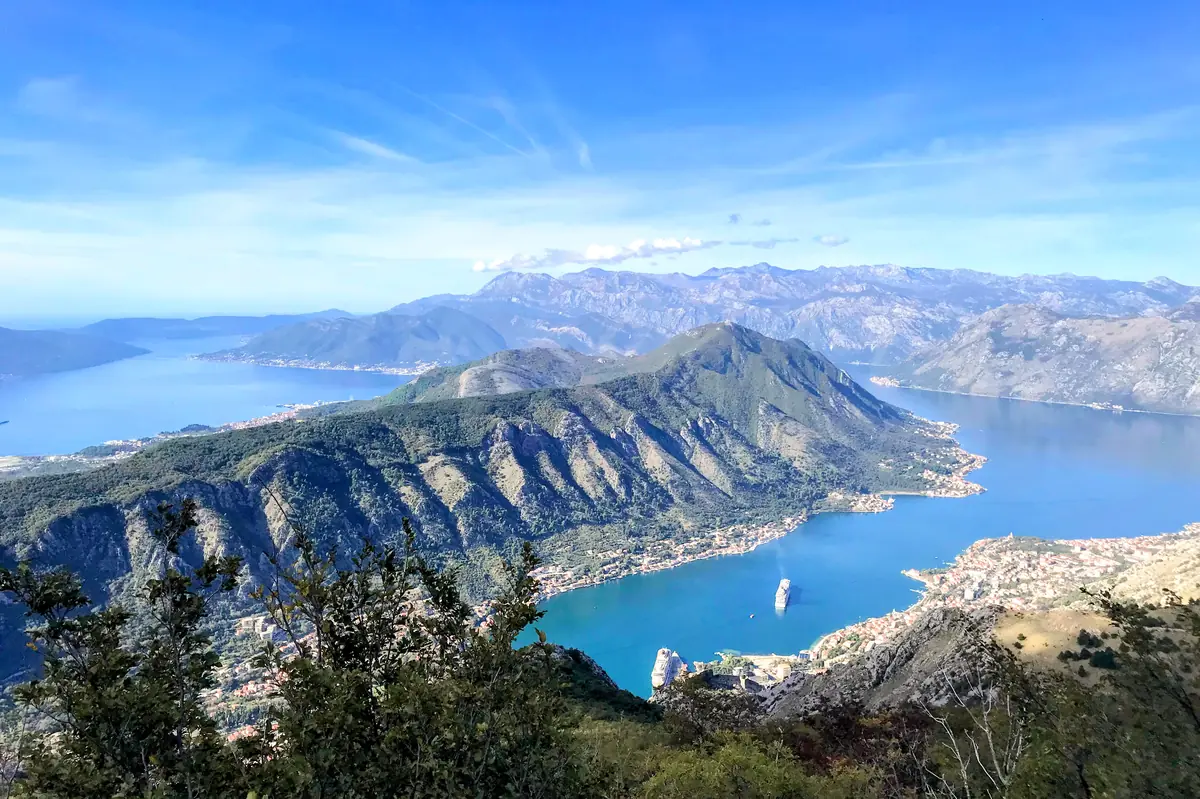
Generally speaking, Montenegro is a remarkably safe country. Whether you are navigating the sun-drenched alleys of the Kotor Old Town or exploring the wild northern peaks of Durmitor, you will find a landscape where “no-go zones” simply do not exist. In the current global safety indices, Montenegro consistently ranks in the upper third – frequently placing higher than both the United States and France.
“There is a palpable sense of social trust here. It is a place where village traditions and modern security coexist, making the approach to travel feel less like a checklist of precautions and more like an open invitation.”
While the country’s history includes a turbulent chapter in the 1990s following the collapse of Yugoslavia, those days are long gone. Today, the transition of power is peaceful, the political climate is stable, and a visible, well-trained police presence ensures that the Montenegrin vibe remains relaxed and secure. However, “safe” does not mean “predictable.” To navigate the country like an insider, you must understand the local quirks, from the competitive driving culture to the 2026 registration requirements.
Security Oversight
The Professional Standard of Law Enforcement
Montenegro maintains a high density of police officers who are well-equipped and trained for international tourist safety. Routine checks are a standard part of civil life, particularly along the Adriatic Highway and near border regions. While these stops may feel frequent, they are generally a straightforward verification of your credentials.
Note: Bribery is a serious criminal offense. Should a violation occur, always settle fines through official channels at a local post office or bank.
Navigating Montenegro’s Roads
If there is a legitimate risk in Montenegro, it is found behind the wheel. During the summer months, the Adriatic Highway can become a theater of restlessness as tourists and locals alike navigate the congestion. Expect a “competitive” driving style: tailgating and aggressive overtaking on narrow mountain serpentines are common.
Safety on these roads begins long before you turn the ignition. Ensuring you have a vehicle capable of handling mountain gradients and the correct insurance coverage is paramount. For a deep dive into choosing the right agency and avoiding predatory deposits, see our comprehensive guide to Renting a Car in Montenegro.
Furthermore, the terrain itself is unforgiving; heavy rains can turn mountainous roads into slippery glass, and rockfalls are a frequent occurrence in the deeper canyons. Exercise caution with third-party taxi operators; ensure vehicles are equipped with functional seatbelts and do not be swayed by the local bravado of “safety is for losers.”
The Train Crossing Rule
Montenegro’s rail infrastructure can be idiosyncratic. If you encounter a level crossing with red lights flashing but other drivers are crossing, it often suggests a signal malfunction. Approach slowly, visually verify the tracks in both directions, and proceed only when clear. Trains here are notoriously slow, making them easy to spot at a distance.
2026 Traffic Compliance Overview
Requirement
Standard & Seasonal Dates
Alcohol Limit
Strict 0.03% (0.3 promille); 0.0% for novice drivers.
Daytime Running Lights
Mandatory 24 hours a day, regardless of weather.
Safety Equipment
High-viz vest, first aid kit, and spare bulbs are required.
Winter Tires
Obligatory from 15 November to 1 April.
Mountain Driving
Snow chains are mandatory on designated high-altitude routes.
Seatbelts
Compulsory for all passengers, including rear seats.
*Regulations strictly enforced by traffic police as of January 2026.
The Taxi Landscape & Local Fares
While Montenegro is largely free from the aggressive tourist traps found in other Mediterranean hubs, the taxi industry remains the primary arena for opportunistic overcharging. Deceitful drivers – often operating without a license – frequently congregate at airports and cruise ship terminals, banking on a visitor’s lack of local context.
The golden rule for 2026: Always ensure the taximeter is engaged from the moment you depart. An official license plate – formatted as City Code (e.g., PG) + TX + Numbers – is your first line of defense. If the plate does not contain the “TX” designation, the vehicle is not a licensed taxi.
At airports, identifying a legitimate vehicle is a matter of geography. Ensure the license plate matches the city of the airport: a vehicle in Tivat (TV) or Podgorica/Zeta (ZT) must bear those respective letters. (Note: While Podgorica is the capital, the airport now falls under the Zeta municipality, hence the ZT prefix). For cruise passengers disembarking in Kotor, be wary of astronomical quotes. Most local trips should fall within the €10 – €20 range. If a driver quotes €100 for a short coastal transfer, you are likely being targeted by a “freelance” operator.
In the narrow coastal veins of Boka Bay and Budva, parking is less of a convenience and more of a strategic challenge. During the peak summer months, spaces are vanishingly rare, leading to a high-stakes game of municipal enforcement.
Beware the “Spider” (Pauk)
Montenegro’s municipal parking service is notoriously vigilant, particularly in places like Petrovac. The “Spider” (tow truck) operates with predatory efficiency in tourist zones. If your vehicle is removed, expect a recovery fee between €120 and €150. Always verify that you are in a marked bay; “creative” parking on sidewalks or near corners is a guaranteed ticket to the impound lot.
A unique local quirk is the “blocked exit.” You may return to find another vehicle parked directly in front of yours, making departure impossible. In most cases, the driver has left a phone number on the dashboard or is sitting in a nearby café.
Pro-Tip: Due to the steep, mountainous terrain, always engage your handbrake and turn your wheels toward the curb when parking. In Montenegro, gravity is as much a factor as the police.
Administrative Safety: The 24-Hour Rule
One of the few bureaucratic hurdles that remains in Montenegro is the mandatory visitor registration. Unlike most other nations, Montenegro does not have a centralized system that automatically tracks your entry for the local municipalities. Consequently, every visitor must be registered with the local ‘Tourist Info’ kiosk within 24 hours of crossing the border.
Your “Pink Slip”: This not-always pink receipt is your proof of legal stay. Ensure your host provides a digital or physical copy before you depart for the border to avoid fines.
If you are staying at a hotel, the reception staff will handle this process seamlessly during check-in. However, for those opting for vacation rentals or private apartments, the responsibility often falls on the host. Do not assume it has been done – explicitly ask your host for the registration receipt (locally known as the potvrda o prijavu boravka).
Social Nuances: Markets & Service
The Market Aesthetic
A visit to a Montenegrin local farmer’s market is a quintessential travel experience. However, tourists are often viewed as high-value targets. Since price tags are rarely displayed, the cost of a kilogram of figs can vary wildly based on the seller’s intuition. Always inquire about the price upfront to ensure you are paying the “local” rate rather than a tourist premium.
The Summer Service Gap
While Montenegrin hospitality is generally warm, the influx of seasonal staff in coastal hotspots can lead to occasional friction. In high-traffic Old Towns or nightclubs, some waiters may attempt to short-change guests or pressure them into excessive tips. Be mindful of the denomination you provide and do not succumb to verbal demands for tips that exceed the standard 10% courtesy.
Insider Note: Dishonest service is the exception, not the rule. Most establishments value long-term reputation over short-term seasonal gain.
Wildfire & Earthquake Risk
July typically marks the commencement of Montenegro’s wildfire season. By the time the height of summer arrives, the landscape has often endured months without significant rainfall. Trees and shrubs become bone-dry, creating a delicate environment where a single spark can ignite entire mountain ranges. These fires are notoriously difficult to contain, often reaching remote, inaccessible regions where only the arrival of late-summer rain provides a final resolution.
The coastal regions and the corridors stretching from Podgorica toward the Bosnian border are the most frequently affected. For the unsuspecting traveler, the speed at which these fires spread can be startling. Beyond the flames themselves, the secondary challenge is air quality. Smoke and particulate matter can travel great distances on the Adriatic winds, causing air pollution to spike even in areas far removed from the fire line. In 2026, it is highly recommended to monitor local media or use air quality apps like IQAir during the peak heat of August.
Earthquake Awareness
While a significant seismic event is statistically unlikely, Montenegro sits in a tectonically active zone. Most locals still hold the memory of the devastating 1979 quake as a cultural touchstone. Modern building codes are now strictly designed to factor in seismic resilience, but a unique risk remains within the “private sector.”
Many private accommodations constructed during the unregulated building boom of the 1990s and early 2000s may not adhere to these modern safety standards. When choosing your base in Montenegro, prioritizing up-to-date, professionally managed buildings or newly renovated hotels offers an extra layer of structural assurance.
Swimming and other water sports activities
Most tourists come to Montenegro for the beaches and the clean and crystal-clear waters of the Adriatic Sea. Swimming is safe under normal conditions everywhere along the coast. There are however two potential dangers you should be aware of:
Scirocco (Jugo): Big waves and unsteady waters. This warm wind originates in the Sahara and leads to waves and rip currents when combined with a rising tide.
Bora Wind: Extreme wind speeds (up to 150 km/h). This is primarily a danger to sailors and boaters, as small vessels run the risk of being dragged into the open sea.
The Adriatic in full force: Large swells in Petrovac are a clear indicator of the Jugo wind. When conditions like these occur, look for the red flag and stay clear of the water to avoid dangerous rip currents.
Swimmers need to pay attention to the local weather conditions and check for the red flag. A red flag indicates unsafe water conditions during which you should not go into the water. The warm Scirocco wind originates in the Sahara desert and leads to waves and rip currents when combined with a rising tide.
Info: Should you find yourself in the sea during these circumstances, you can help yourself get out by swimming parallel to the shoreline. Do not attempt to fight the waves; this will only lead to panic.
The Bora Wind is not so much a danger to beachgoers as it is to sailors and boaters. It is a very strong northern wind that often blows for days in a row. Wind speeds can reach up to 150 km/h along the coast of Montenegro.
Should you find yourself in a small vessel, you run the risk of being dragged out into the open sea and having your sail and pole devastated. Montenegro has a Maritime Search and Rescue Subdivision that can be reached under the number 129.
Getting lost in the wild
Year in and year out, adventurers who visited Montenegro ran into hazardous situations. Some got lost in the wild and vast mountain landscape or a national park while others got injured while mountain climbing or hiking.
Untamed Beauty: Montenegro’s peaks are stunning but can be treacherous. Always stick to marked trails and check the local forecast for heavy rain or fog.
Emergency Protocol: If you find yourself in a precarious situation, it is best to call 112 and ask for help. Montenegro has a dedicated Mountain Rescue Team that is specialized in emergency recovery.
Before embarking on a road trip, double-check if you have taken all safety gear with you, especially when camping. If you want to hike the most intricate mountains, you need to be prepared. What looks easy on paper, can be much more challenging in reality. Try to stick to the marked hiking trails.
Travel Resources & Emergency Contacts
Before arriving, ensure your passport is valid and you have comprehensive travel insurance. If you are a victim of an unlawful act, report it to the nearest police station immediately.
General Emergency: 112
Police: 122
Fire Department: 123
Ambulance: 124
The Reality Check: Challenges in Montenegro
While Montenegro is remarkably safe, no destination is perfect. To have a stress-free trip, you should be aware of these local realities:
Infrastructure: Public transport is limited; relying on a car is better, though roads get clogged in summer and the driving culture is aggressive.
Service Standards: Due to labor shortages, service in hotels and restaurants can be subpar. Don’t expect a smile—the local “slow” mentality is standard.
Environment: Expect overcrowded beaches in August and occasional issues with visible plastic waste or stray animals in towns.
Healthcare & Smoking: Hospitals are not at Western European levels. Additionally, while prohibited indoors, you will still encounter heavy smoking in many social areas.
Conclusion: Is Montenegro Safe?
Yes, Montenegro is safe. The crime rate is low, and the security situation is stable. The most common “dangers” you will face are illegal taxi drivers trying to overcharge you or the frustration of slow service in a supermarket.
The fact that thousands of migrants and expats have lived here for years without major issues is a testament to the country’s safety. If you come prepared for the local mentality, respect the mountain trails, and keep an eye on your registration paperwork, you will find Montenegro to be one of the most welcoming and stunning destinations in Europe.
Frequently Asked Questions
Is Montenegro safe for solo female travelers?
Montenegro is one of the safest countries for solo female travelers. Women can safely roam the streets, go out, and return home at night even without company. Violent incidents are rare. Offenders may be sentenced to very long prison sentences for serious felonies. Lighter transgressions often lead to immediate deportation. There have been some reports of solo female hitchhikers who got chatted up by local men. While there have been no notable incidents and the drivers were probably just trying to hook up, it might be safer just to take the bus or train.
Is it safe for Americans to travel to Montenegro?
The number of American tourists in Montenegro has been increasing steadily for the last couple of years. It is safe to travel to Montenegro, much safer than traveling to South America for example. According to safety indices, even safer than in the USA itself. Montenegrins are accustomed to foreign tourists. During the peak season, there are more tourists in the country than natives. Rarely are there any notable incidents? Violent crime is not common but exercise normal precautions nonetheless. If you have traveled to the Balkans or other Eastern European countries before, you will probably have noticed that the whole region was very safe. Children often play outside without parental supervision. Car thefts and armed robberies are very rare in Montenegro.
Is Montenegro safe for black tourists?
Montenegro is safe for black tourists. There is no history of racial discrimination against black people. Montenegro is a very safe destination for everyone. Just watch out for your safety as you would in your home country, and abide by local laws such as having no illegal drugs on you. Recreational drugs such as Cannabis are not legal. In coastal Montenegro, locals are used to seeing tourists of any skin color daily. This is different in rural areas. If you venture out into remote areas, locals might be simply surprised to see a black person because it is a rare occurrence and they are not accustomed to it. But it’s not dangerous.
I am a resident (and citizen) of the Montenegrin coast, dedicated to uncovering the authentic side of the Adriatic beyond the typical tourist brochures. Whether I’m exploring the Grbalj hinterlands for the best local produce or navigating the ancient alleys of Kotor’s Old Town, my guides are built on first-hand experience and a love for Montenegro’s complex history.