

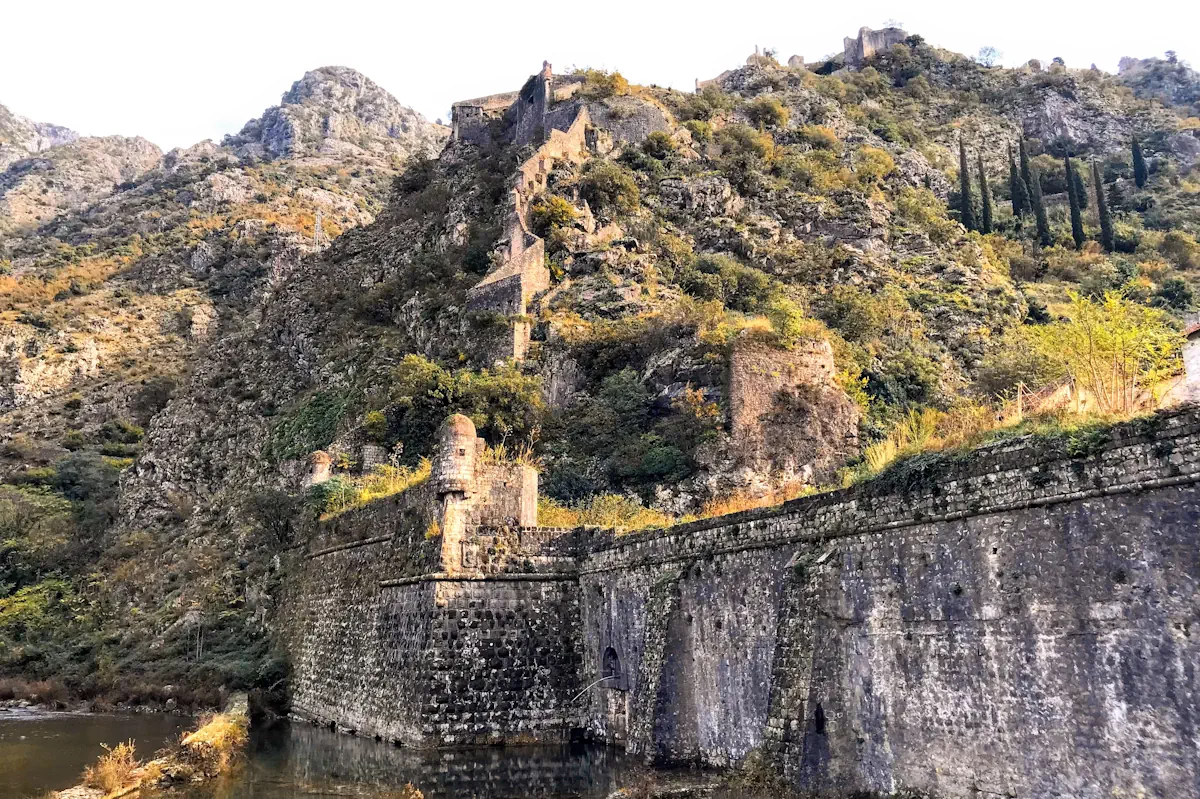

Visiting Kotor and not climbing up St. John’s / San Giovanni Fortress is like going to Rome and not bothering to see the Colosseum.
Controlling the Bay of Kotor from a karst limestone bluff, the imposing Kotor Fortress spreads along the mountain, reaching 280 meters at its highest point. Whether you call it San Giovanni, St. John’s, or simply the Kotor City Walls, this 4.5-kilometer fortification system is one of Montenegro’s most rewarding UNESCO World Heritage Sites.
The reward for the climb: A panoramic view over the terracotta roofs of the Old Town and the shimmering Boka Bay.
Chronicles of San Giovanni
Illyrian Roots & Roman Ascrivium
Owing to its strategic location, the site has been a defensive position since Illyrian times. When the Romans invaded and established Kotor as Ascrivium, they rehabilitated the existing structures into a formal fortification.
The Byzantine Reconstruction
Emperor Justinian I commissioned a total reconstruction. For the next millennium, it served as a crucial stronghold for Byzantines and various Balkan kings at the intersection of the Mediterranean and the interior.
The Venetian Masterpiece
Under the Republic of Venice, the walls were substantially rebuilt to their modern 4.5km circuit. Bastions, depots, and the Church of Our Lady of Remedy were added, allowing the fortress to function autonomously during sieges.
Defying Hayreddin Barbarossa
The fortress played a pivotal role in successfully rebuffing Ottoman forces led by the legendary Hayreddin Barbarossa. While other coastal towns fell, Kotor’s walls held firm.
UNESCO World Heritage Site
Now recognized globally as a “Venetian Work of Defense,” the fortress remains Kotor’s crowning achievement, attracting hikers from around the world to its 1,350 historic steps.
Climbing the 1,350 Steps
Hiking up the thousand-year-old stone pathway feels like stepping back in time. For most travelers, the ascent takes between 45 minutes and an hour.
The ancient stone staircase winds steeply up the karst cliffs, offering a glimpse into Kotor’s medieval defensive past.
The Halfway Point: Our Lady of Remedy
After roughly 650 steps, you’ll reach the Church of Our Lady of Remedy. Built in the 16th century, this Catholic church is seamlessly integrated into the ramparts. For those with less-than-optimal fitness, this is a reasonable milestone – the views from the church terrace are already superb.
The Summit: San Giovanni
Push through the remaining 700 steps to reach the San Giovanni summit. From here, the terracotta roofs of the Old Town and the giant cruise ships in the harbor look minuscule. Pro Tip: Aim for the “magic hour” – one hour before sunset – for the most stunning photography.
The Three Gates of Kotor
Kotor’s city walls are pierced by three distinct gates, each serving a different strategic purpose. By nightfall, all gates were closed to ensure the safety of the residents within.
The Sea Gate
Built in 1555 following the Ottoman sieges, this is the most impressive entry. It opens directly onto the Square of Arms. Look for the weathered Lion of Venice relief just south of the gate, a symbol of the Republic’s centuries-long dominance.
The Northern Gate
Completed in response to the 1539 Ottoman invasion, this gate connects the city to the Škurda River. The river acts as a natural moat, creating a formidable barrier for any land-based invading force.
The Gurdić Gate
This is the oldest and most impeccable part of the walls. It features a unique triple-barrier system and a wooden drawbridge. The inner gate dates back to the 13th century.
Travel Tip: Climb the walls here for free to enjoy panoramic views over the southern end of the bay.
