


Payment Methods: Cash vs. Card in 2026
| Service / Venue | Expectation | Local Advice |
|---|---|---|
| Supermarkets (Voli, IDEA) | Card Preferred | Contactless (Apple/Google Pay) is standard here. |
| Gas Stations | Card Preferred | Major brands (EKO, Petrol) accept all international cards. |
| Coastal Restaurants | Mixed | Cards accepted for meals, but cash is appreciated for tips. |
| Taxis & Local Parking | Cash Only | Most independent taxis do not have POS terminals. Carry small change. |
| Old Town Souvenirs | Cash Only | Small shops often have a €10 minimum for card payments. |
The Traveler’s Cash Protocol
Embrace Small Denominations
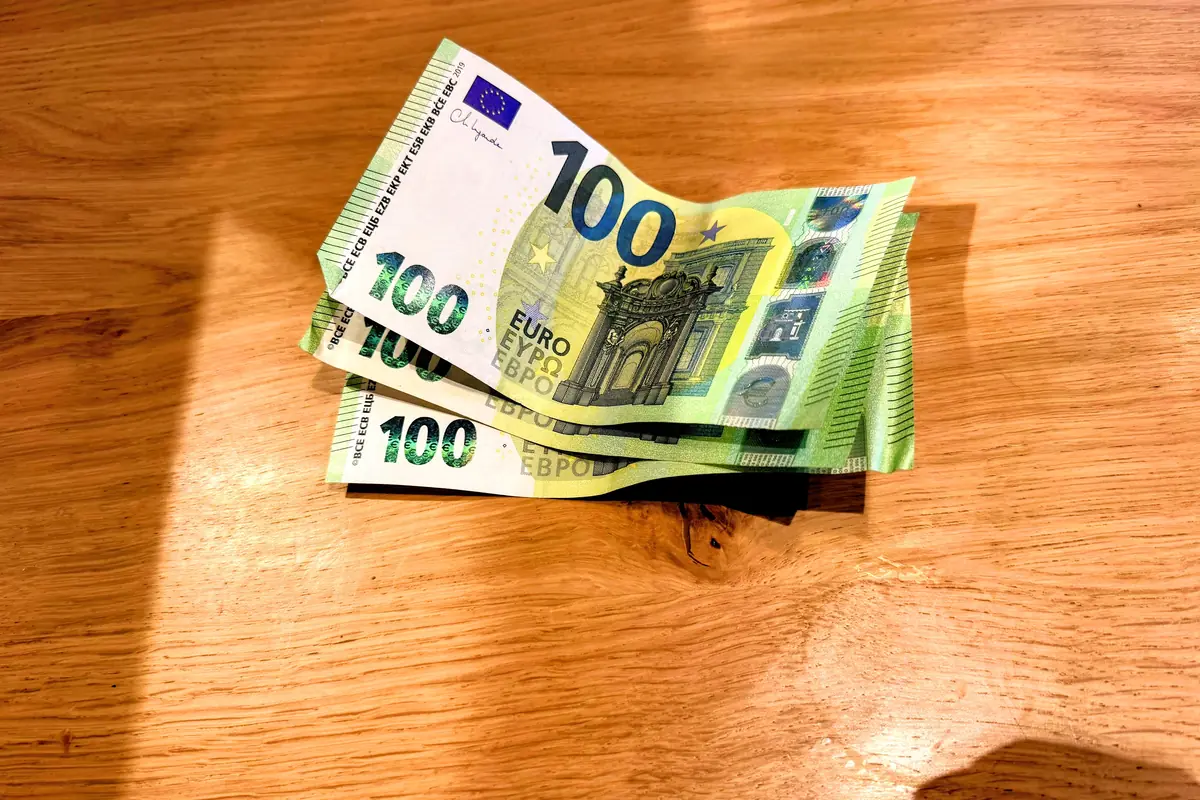
While €50 and €100 notes are common at banks, small family-run konobas and bakeries often struggle with change. Keep €5, €10, and €20 notes handy.
The “Decline Conversion” Rule
When using an ATM or card terminal, always choose to be charged in EUR. Never let the machine do the conversion for you, as the rates are notoriously poor.
Carry Emergency Backup
Even in 2026, many of Montenegro’s best “hidden gems” remain cash-only. Always carry at least €20–€30 in cash for parking, coffee, or rural surprises.
The “ATM Trap”: Decline the Conversion
When you insert your card into a Montenegrin ATM, the machine will often recognize that your home account is in USD, GBP, or another currency. It will then offer to “guarantee” a fixed exchange rate for you.
The Choice on Screen:
- ✕ “Accept Conversion” – This allows the local bank to set the rate (usually 10% worse than the market).
- ✓ “Decline Conversion” – This forces the machine to charge you in Euros, allowing your home bank (or Wise/Revolut) to give you the real exchange rate.
Expert Tip: The ATM might use scary language like “We cannot guarantee the exchange rate of your home bank.” Do not be intimidated. Always choose to be charged in the local currency (EUR).
ATMs, Cards, and Banks
Withdrawals and Limits
Most Montenegrin ATMs (CKB, NLB, Hipotekarna) have a daily withdrawal limit, typically capped at €500. While convenient, be aware that many local banks now charge a standard €5.00 transaction fee for foreign cards. To minimize costs, withdraw larger amounts less frequently rather than small amounts often.
Exchanging Currency
Exchanging physical cash (like USD or GBP) can be surprisingly cumbersome. Currency exchange offices are rare; most transactions happen inside banks, which often involves waiting in a queue. We highly recommend either using services like Wise or Revolut to withdraw directly from an ATM or exchanging money beforehand in your home country, possibly at better rates.
The Story of a “Borrowed” Currency
Montenegro’s relationship with the Euro is unique. Unlike its neighbors, Montenegro does not have its own central bank that mints its own coins. This stems from a period of economic hyperinflation in the early 1990s, where the Yugoslav Dinar lost its value so rapidly that annual inflation reached trillions of percent.
The Bartering Economy
Because Montenegro cannot control its own money supply, the physical availability of cash can sometimes be tight. This has led to a fascinating local tradition of bartering, particularly in the real estate sector. It is not uncommon for contractors to be “paid” in finished apartments rather than cash, who then barter those units for materials or vehicles. It is a rational response to a unique monetary situation.
In 1999, to find stability, Montenegro adopted the Deutsche Mark, which seamlessly transitioned into the Euro in 2002. Today, this “unilateral euroization” provides a stable foundation for foreign investors and travelers alike, eliminating the stress of exchange rate volatility that often plagues other Balkan destinations.
